Natural Product (NP) Details
| General Information of the NP (ID: NP0601) | |||||
|---|---|---|---|---|---|
| Name |
Piperlongumine
|
||||
| Synonyms |
Piperlongumine; Piplartine; 20069-09-4; Piperlongumin; UNII-SGD66V4SVJ; (E)-1-(3-(3,4,5-trimethoxyphenyl)acryloyl)-5,6-dihydropyridin-2(1H)-one; CHEBI:8241; SGD66V4SVJ; MFCD00075706; ST079382; 1-[(2E)-3-(3,4,5-trimethoxyphenyl)prop-2-enoyl]-1,2,5,6-tetrahydropyridin-2-one; 2(1H)-Pyridinone, 5,6-dihydro-1-[(2E)-1-oxo-3-(3,4,5-trimethoxyphenyl)-2-propen-1-yl]-; 5,6-Dihydro-1-[(2E)-1-oxo-3-(3,4,5-trimethoxyphenyl)-2-propen-1-yl]-2(1H)-pyridinone; BRD2293; Piplartin; BRD-2293; PPLGM; (E)-1-[3-(3,4,5-Trimethoxyphenyl)acryloyl]-5,6-dihydropyridin-2(1H)-one; 1-[(E)-3-(3,4,5-trimethoxyphenyl)prop-2-enoyl]-2,3-dihydropyridin-6-one; 5,6-Dihydro-1-(1-oxo-3-[3,4,5-trimethoxyphenyl]-trans-2-propenyl)-2[1H]-pyridinone; 5,6-Dihydro-1-[1-oxo-3-(3,4,5-trimethoxyphenyl)-trans-2-propenyl]-2(1H)-pyridinone; Piplartine;PPLGM; Prestwick_399; FERROUSFLUOBORATE; Prestwick2_000604; Prestwick3_000604; Piperlongumine; Piplartine; BSPBio_000508; MLS002153903; SCHEMBL173092; SPECTRUM1505135; BPBio1_000560; CHEMBL465843; SCHEMBL2465593; 1-[3-(3,4,5-Trimethoxy-phenyl)-acryloyl]-5,6-dihydro-1H-pyridin-2-one; ACon1_001541; CHEBI:92424; HMS1569J10; HMS2096J10; HMS2234K24; Piperlongumine, >=97% (HPLC); ZINC899053; BCP13030; EX-A2925; HY-N2329; 2659AH; BDBM50462013; NSC794671; s7551; AKOS024284776; CCG-214375; NSC-794671; 2(1H)-Pyridinone, 5,6-dihydro-1-(1-oxo-3-(3,4,5-trimethoxyphenyl)-2-propenyl)-, (E)-; NCGC00096028-01; NCGC00096028-02; NCGC00096028-03; NCGC00096028-04; NCGC00096028-14; AC-32683; AS-74140; BP-25401; LS-14579; SMR001233252; CS-0021113; P2361; A14124; C10166; SR-01000841248; A1-00162; J-012992; N-(3,4,5-Trimethoxycinnamoyl)-D3-piperidin-2-one; Q7197361; SR-01000841248-2; BRD-K24132293-001-05-3; BRD-K24132293-001-09-5; BRD-K24132293-001-16-0; 5,6-Dihydro-1-(3,4,5-trimethoxycinnamoyl)-2(1H)-pyridinone; 1-[(2E)-3-(3,4,5-Trimethoxyphenyl)-2-propenoyl]-5,6-dihydro-2(1H)-pyridinone #; 1-[(2E)-3-(3,4,5-trimethoxyphenyl)prop-2-enoyl]-1,5,6-trihydropyridin-2-one; 1-[(2E)-3-(3,4,5-trimethoxyphenyl)prop-2-enoyl]-5,6-dihydropyridin-2(1H)-one; 5,6-Dihydro-1-[1-oxo-3-(3,4,5-trimethoxyphenyl)-2-propenyl]-2(1H)-pyridinone, 9CI; Prop-2-en-1-one, 3-(3,4,5-trimethoxyphenyl)-1-(2,3-dihydropyridin-6(1H)-one-1-yl)-; (2E)-1-(1,2,5,6-Tetrahydro-2-oxopyridine-1-yl)-3-(3,4,5-trimethoxyphenyl)-2-propene-1-one
Click to Show/Hide
|
||||
| Species Origin | Piper longum ... | Click to Show/Hide | |||
| Piper longum | |||||
| Disease | Solid tumour/cancer [ICD-11: 2A00-2F9Z] | Preclinical | [1] | ||
| Structure |

|
Click to Download Mol2D MOL |
|||
| ADMET Property |
Absporption
Caco-2 Permeability
-4.691
MDCK Permeability
-4.705
PAMPA
- - -
HIA
- - -
Distribution
VDss
-0.25
PPB
89.8%
BBB
+++
Metabolism
CYP1A2 inhibitor
+++
CYP1A2 substrate
- -
CYP2C19 inhibitor
- -
CYP2C19 substrate
- - -
CYP2C9 inhibitor
- - -
CYP2C9 substrate
- - -
CYP2D6 inhibitor
- - -
CYP2D6 substrate
- - -
CYP3A4 inhibitor
- - -
CYP3A4 substrate
- - -
CYP2B6 inhibitor
- - -
CYP2B6 substrate
- - -
CYP2C8 inhibitor
+++
HLM Stability
++
Excretion
CLplasma
6.772
T1/2
1.112
Toxicity
DILI
+
Rat Oral Acute Toxicity
-
FDAMDD
+
Respiratory
+
Human Hepatotoxicity
+
Ototoxicity
- -
Drug-induced Nephrotoxicity
-
Drug-induced Neurotoxicity
++
Hematotoxicity
-
Genotoxicity
++
Tips: 1. For the classification endpoints, the prediction probability values are transformed into six symbols: 0-0.1 (- - -), 0.1-0.3 (- -), 0.3-0.5 (-), 0.5-0.7 (+), 0.7-0.9 (++), and 0.9-1.0 (+++).
2. Additionally, the corresponding relationships of the three labels are as follows: excellent; medium; poor.
Click to Show/Hide
|
||||
| Click to Show/Hide the Molecular Information and External Link(s) of This Natural Product | |||||
| Formula |
C17H19NO5
|
||||
| PubChem CID | |||||
| Canonical SMILES |
COC1=CC(=CC(=C1OC)OC)C=CC(=O)N2CCC=CC2=O
|
||||
| InChI |
1S/C17H19NO5/c1-21-13-10-12(11-14(22-2)17(13)23-3)7-8-16(20)18-9-5-4-6-15(18)19/h4,6-8,10-11H,5,9H2,1-3H3/b8-7+
|
||||
| InChIKey |
VABYUUZNAVQNPG-BQYQJAHWSA-N
|
||||
| CAS Number |
CAS 20069-09-4
|
||||
| ChEBI ID | |||||
| Herb ID | |||||
| TTD Drug ID | |||||
| Combinatorial Therapeutic Effect(s) Validated Clinically or Experimentally | ||||||
|---|---|---|---|---|---|---|
| α. A List of Drug(s) Whose Efficacy can be Enhanced by This NP | ||||||
| Oxaliplatin | Colorectal cancer | Click to Show/Hide the Molecular Data of This Drug | ||||
| Achieving Therapeutic Synergy | Click to Show/Hide | |||||
| Representative Experiment Reporting the Effect of This Combination | [2] | |||||
| Detail(s) |
Combination Info
 click to show the detail info of this combination
|
|||||
| Molecule(s)
Regulation |
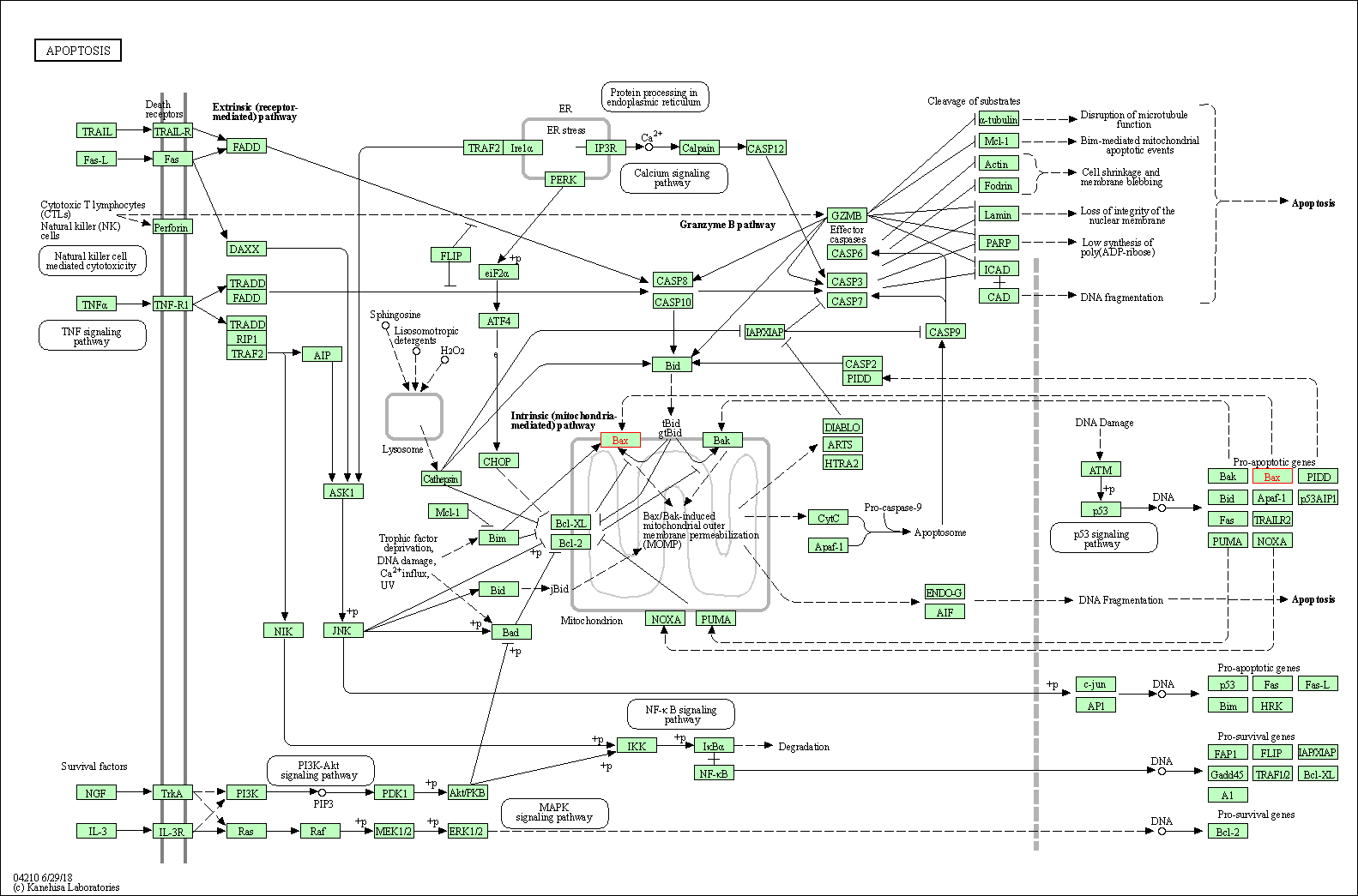
Up-regulation | Expression | BAX | Molecule Info |
Pathway MAP
|
|
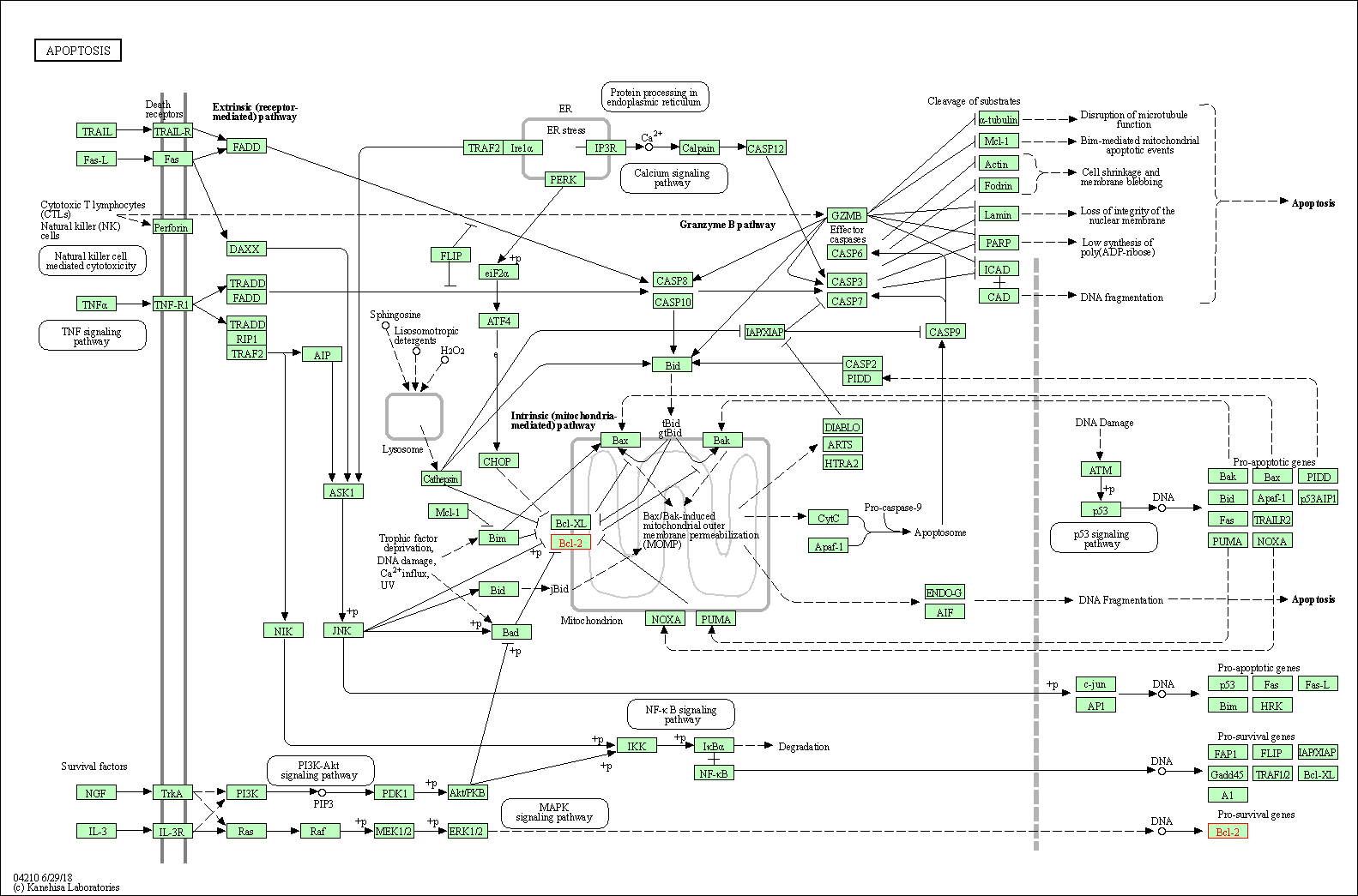
| Down-regulation | Expression | BCL-2 | Molecule Info |
Pathway MAP
|
||
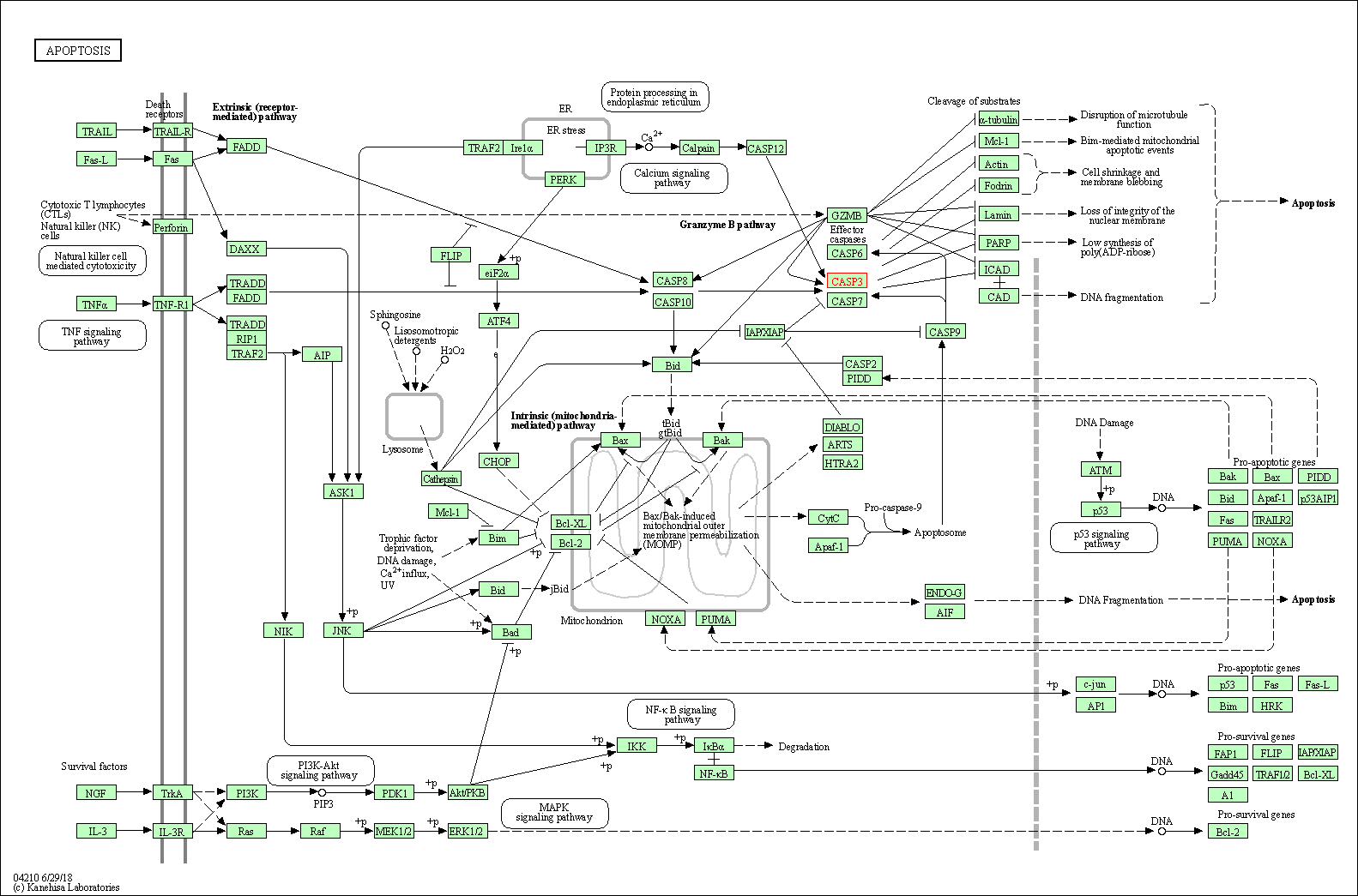
| Up-regulation | Activity | CASP3 | Molecule Info |
Pathway MAP
|
||
| In-vitro Model | HCT 116 | CVCL_0291 | Colon carcinoma | Homo sapiens | ||
| LoVo | CVCL_0399 | Colon adenocarcinoma | Homo sapiens | |||
| GES-1 | CVCL_EQ22 | Healthy | Homo sapiens | |||
| In-vivo Model | For a xenograft model, HCT-116 cells (1*107 in 150 uL PBS) were subcutaneously injected into the right flank of five-week-old female athymic BALB/c nu/nu mice. | |||||
| Experimental
Result(s) |
The synergistic effects of oxaliplatin and piperlongumine on colorectal cancer are mediated by oxidative stress. | |||||
| Target and Pathway | ||||
|---|---|---|---|---|
| Target(s) | Glutathione S-transferase omega-1 (GSTO-1) | Molecule Info | [3] | |