Natural Product (NP) Details
| General Information of the NP (ID: NP6514) | |||||
|---|---|---|---|---|---|
| Name |
Demethoxycurcumin
|
||||
| Synonyms |
Demethoxycurcumin; 22608-11-3; monodemethoxycurcumin; BHCFM; 24939-17-1; 4-Hydroxycinnamoyl(feroyl)methane; desmethoxycurcumin; Feruloyl-P-hydroxycinnnamoylmethane; curcuminII; (1E,6E)-1-(4-hydroxy-3-methoxyphenyl)-7-(4-hydroxyphenyl)hepta-1,6-diene-3,5-dione; UNII-W2F8059T80; 1,6-Heptadiene-3,5-dione, 1-(4-hydroxy-3-methoxyphenyl)-7-(4-hydroxyphenyl)-; 33171-16-3; p-Hydroxycinnamoylferuloylmethane; CHEBI:65737; 4-hydroxycinnamoyl(feruloyl)methane; MFCD03427310; NSC687841; W2F8059T80; (E/Z)-Demethoxycurcumin; 1-(4-Hydroxy-3-methoxyphenyl)-7-(4-hydroxyphenyl)-1,6-heptadiene-3,5-dione; 1-(4-hydroxy-3-methoxyphenyl)-7-(4-hydroxyphenyl)hepta-1,6-diene-3,5-dione; demethoxy-curcumin; (1E,6E)-1-(4-hydroxy-3-methoxyphenyl)-7-(4-hydroxyphenyl)-1,6-heptadiene-3,5-dione; (1E,6E)-1-(4-hydroxy-3-methoxyphenyl)-7-(4-hydroxyphenyl)-hepta-1,6-diene-3,5-dione; (2E)-Demethoxy Curcumin; feruloyl-p-coumaroylmethane; (1E,6E)-Demethoxycurcumin; SCHEMBL431246; CHEMBL105360; SCHEMBL2553051; SCHEMBL13521973; cid_5324476; HY-N0006A; DTXSID00873751; (1E,6E)-1-(4-HYDROXY-3-METHOXY-PHENYL)-7-(4-HYDROXYPHENYL)HEPTA-1,6-DI ENE-3,5-DIONE; ZINC5115722; Demethoxycurcumin, >=98% (HPLC); 9331AF; BDBM50163744; s9280; Demethoxycurcumin, analytical standard; AKOS015903509; CCG-267896; NSC-687841; (E,E)-1-(4-Hydroxy-3-methoxyphenyl)-7-(4-hydroxyphenyl)-1,6-heptadiene-3,5-dione; LS-14764; CS-0009120; N1720; X1121; A14545; 6-Bromo-2-pyridin-4-yl-quinoline-4-carboxylicacid; Q-100287; Q5264607; 1-(4-Hydroxystyryl)-3-(3-methoxy-4-hydroxystyryl)propanedial; (1E,6E)-1-(4-Hydroxy-3-methoxy-phenyl)-7-(4-hydroxy-phenyl)-hepta-1,6-diene-3,5-dione; 1,6-Heptadiene-3,5-dione, 1-(4-hydroxy-3-methoxyphenyl)-7-(4-hydroxyphenyl)- (VAN); 1,6-Heptadiene-3,5-dione, 1-(4-hydroxy-3-methoxyphenyl)-7-(4-hydroxyphenyl)-, (1E,6E)-; 1-(4-Hydroxy-3-methoxyphenyl)-7-(4-hydroxyphenyl)-1,6-heptadiene-3,5-dione, 9CI; 5-hydroxy-7-(4-hydroxy-3-methoxyphenyl)-1-(4-hydroxyphenyl)hepta-1,4,6-trien-3-one; (1E,4Z,6E)-5-Hydroxy-1-(4-hydroxy-3-methoxy-phenyl)-7-(4-hydroxy-phenyl)-hepta-1,4,6-trien-3-one; (1E,6E)-1-(4-HYDROXY-3-METHOXY-PHENYL)-7-(4-HYDROXYPHENYL)HEPTA-1,6-DIENE-3,5-DIONE; 297160-27-1
Click to Show/Hide
|
||||
| Species Origin | Curcumin ... | Click to Show/Hide | |||
| Curcumin | |||||
| Disease | Staphylococcus infection [ICD-11: 1C41] | Investigative | [1] | ||
| Structure |

|
Click to Download Mol2D MOL |
|||
| ADMET Property |
Absporption
Caco-2 Permeability
-5.297
MDCK Permeability
-4.932
PAMPA
- -
HIA
- - -
Distribution
VDss
-0.627
PPB
97.2%
BBB
- - -
Metabolism
CYP1A2 inhibitor
+++
CYP1A2 substrate
- - -
CYP2C19 inhibitor
- -
CYP2C19 substrate
- - -
CYP2C9 inhibitor
+
CYP2C9 substrate
- - -
CYP2D6 inhibitor
- -
CYP2D6 substrate
+++
CYP3A4 inhibitor
- -
CYP3A4 substrate
- - -
CYP2B6 inhibitor
+++
CYP2B6 substrate
- - -
CYP2C8 inhibitor
+++
HLM Stability
-
Excretion
CLplasma
9.365
T1/2
1.006
Toxicity
DILI
- - -
Rat Oral Acute Toxicity
- - -
FDAMDD
-
Respiratory
+
Human Hepatotoxicity
-
Ototoxicity
- - -
Drug-induced Nephrotoxicity
- -
Drug-induced Neurotoxicity
+
Hematotoxicity
- - -
Genotoxicity
- -
Tips: 1. For the classification endpoints, the prediction probability values are transformed into six symbols: 0-0.1 (- - -), 0.1-0.3 (- -), 0.3-0.5 (-), 0.5-0.7 (+), 0.7-0.9 (++), and 0.9-1.0 (+++).
2. Additionally, the corresponding relationships of the three labels are as follows: excellent; medium; poor.
Click to Show/Hide
|
||||
| Click to Show/Hide the Molecular Information and External Link(s) of This Natural Product | |||||
| Formula |
C20H18O5
|
||||
| PubChem CID | |||||
| Canonical SMILES |
COC1=C(C=CC(=C1)C=CC(=O)CC(=O)C=CC2=CC=C(C=C2)O)O
|
||||
| InChI |
1S/C20H18O5/c1-25-20-12-15(6-11-19(20)24)5-10-18(23)13-17(22)9-4-14-2-7-16(21)8-3-14/h2-12,21,24H,13H2,1H3/b9-4+,10-5+
|
||||
| InChIKey |
HJTVQHVGMGKONQ-LUZURFALSA-N
|
||||
| CAS Number |
CAS 22608-11-3
|
||||
| ChEBI ID | |||||
| Herb ID | |||||
| SymMap ID | |||||
| TCMSP ID | |||||
| TTD Drug ID | |||||
| Combinatorial Therapeutic Effect(s) Validated Clinically or Experimentally | ||||||
|---|---|---|---|---|---|---|
| α. A List of Drug(s) Whose Resistance can be Reversed by This NP | ||||||
| Cisplatin | Bladder cancer | Click to Show/Hide the Molecular Data of This Drug | ||||
| Reversing Drug Resistance | Click to Show/Hide | |||||
| Representative Experiment Reporting the Effect of This Combination | [2] | |||||
| Detail(s) |
Combination Info
 click to show the detail info of this combination
|
|||||
| Molecule(s)
Regulation |
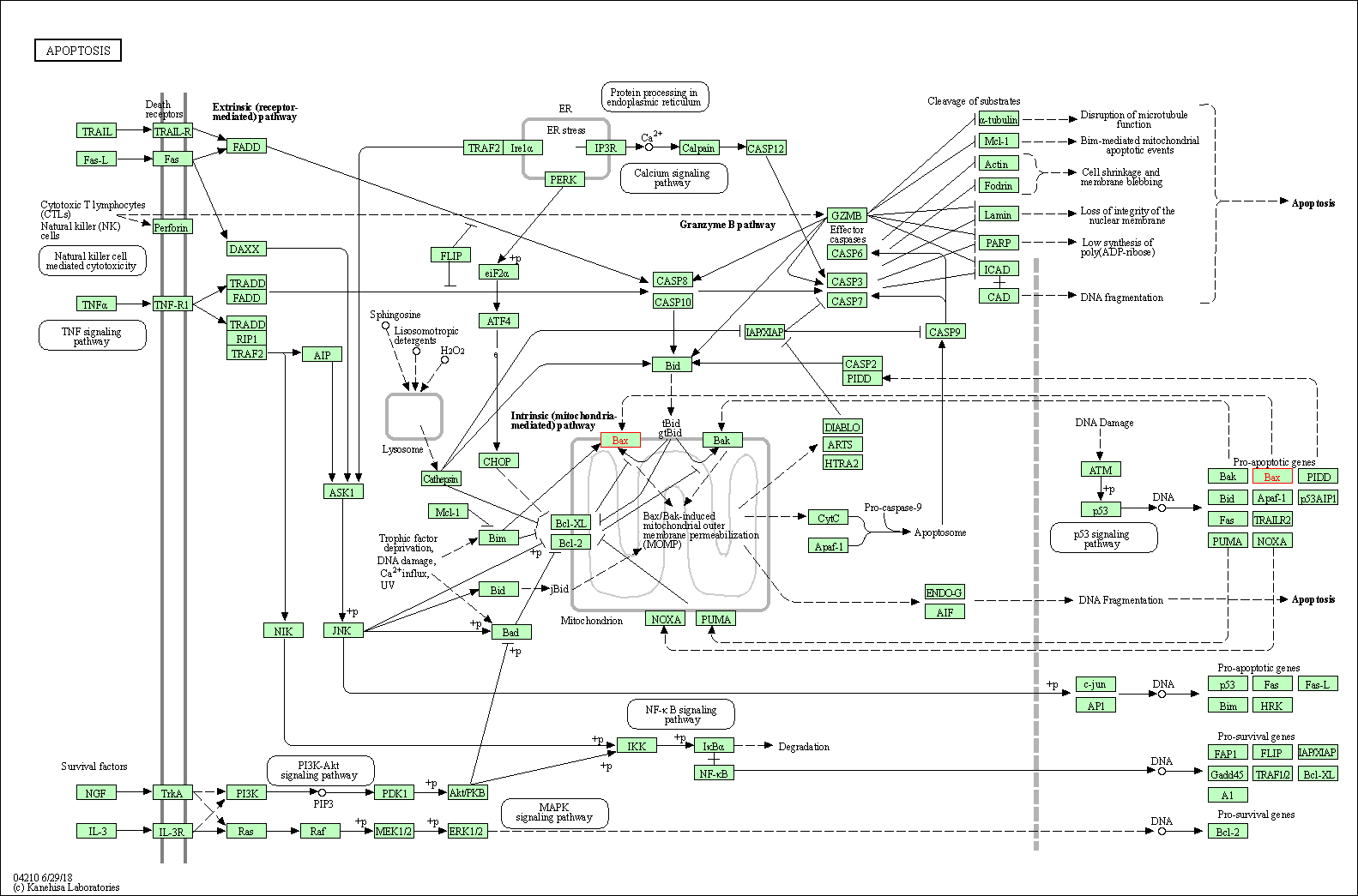
Up-regulation | Expression | BAX | Molecule Info |
Pathway MAP
|
|
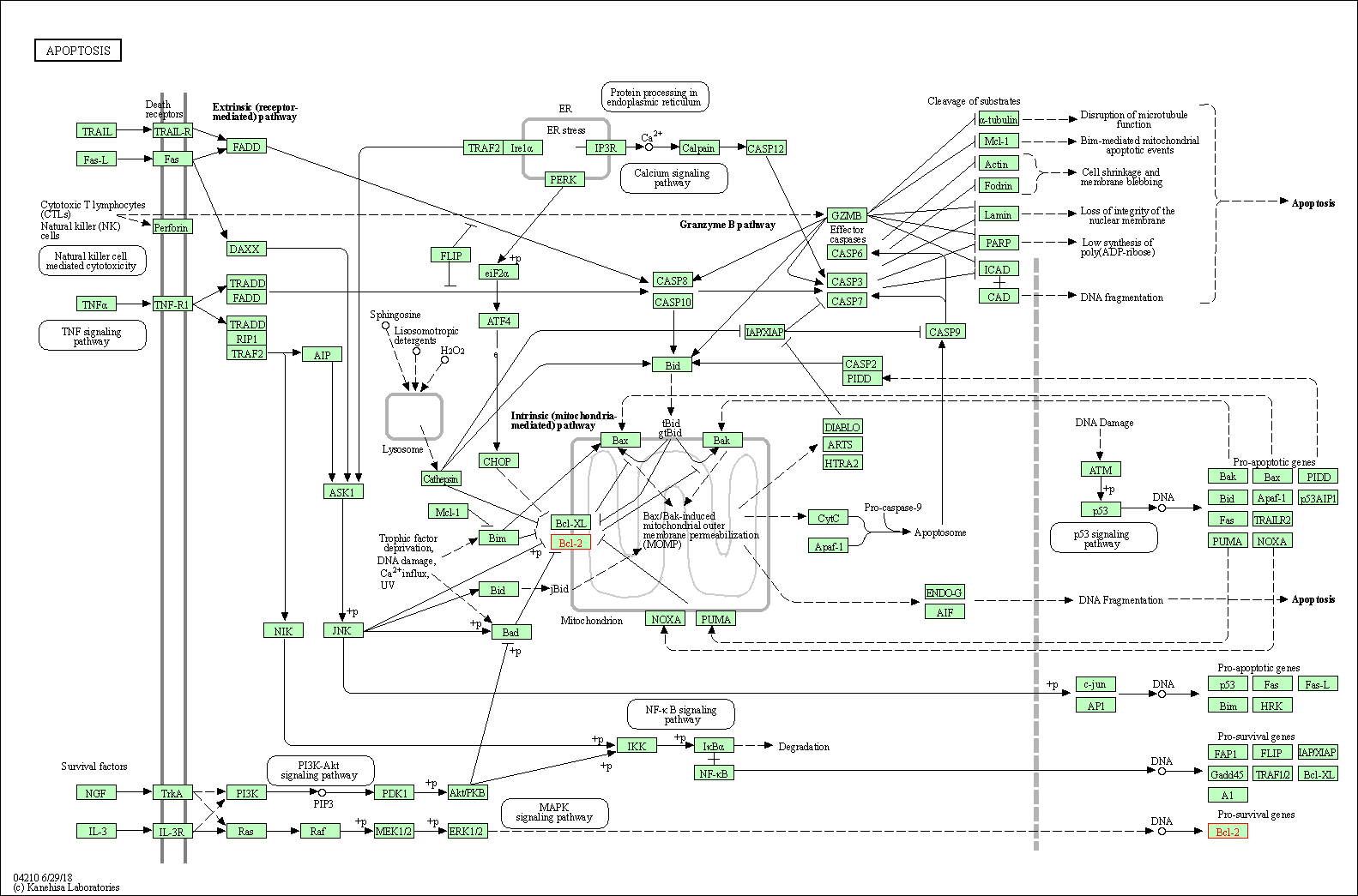
| Down-regulation | Expression | BCL-2 | Molecule Info |
Pathway MAP
|
||
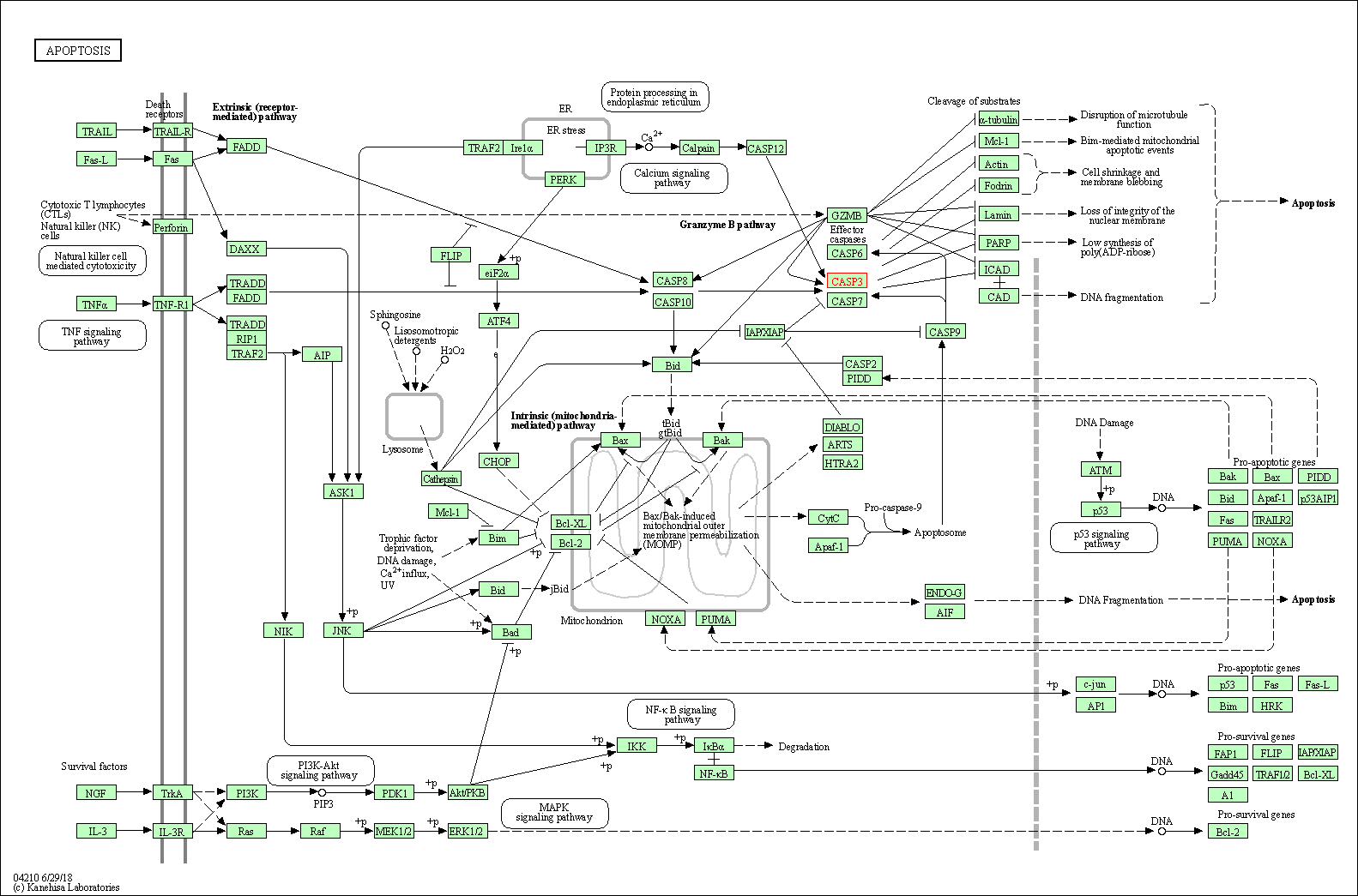
| Up-regulation | Cleavage | CASP3 | Molecule Info |
Pathway MAP
|
||
| In-vitro Model | A-549 | CVCL_0023 | Lung adenocarcinoma | Homo sapiens | ||
| In-vivo Model | For a xenograft model, A549/DDP cells were injected into the inguinal mammary fat pad of Balb/c congenic athymic nude mice. | |||||
| Experimental
Result(s) |
DMC in combination with DDP may be considered as a novel combination regimen for restoring DDP sensitivity in DDP-resistant NSCLC cells. | |||||
| AT101 | Prostate cancer | Click to Show/Hide the Molecular Data of This Drug | ||||
| Reversing Drug Resistance | Click to Show/Hide | |||||
| Representative Experiment Reporting the Effect of This Combination | [3] | |||||
| Detail(s) |
Combination Info
click to show the detail info of this combination
|
|||||
| Molecule(s)
Regulation |
Up-regulation | Phosphorylation | AKT1 | Molecule Info |
Pathway MAP
|
|
| In-vitro Model | Cells derived from glioblastoma multiforme patients | Glioblastoma multiforme | Homo sapiens | |||
| Experimental
Result(s) |
Phosphorylation and thereby activation of the kinases p44/42 and Akt, which are involved in proliferation and survival processes, were inhibited, the mitochondrial membrane potential of the GBM cells was altered, and genes involved in dormancy-associated processes were regulated by the combined treatment strategy. | |||||
| Target and Pathway | ||||
|---|---|---|---|---|
| Target(s) | Prostaglandin G/H synthase 1 (COX-1) | Molecule Info | [4] | |
| BioCyc | C20 prostanoid biosynthesis | Click to Show/Hide | ||
| KEGG Pathway | Arachidonic acid metabolism | Click to Show/Hide | ||
| 2 | Metabolic pathways | |||
| 3 | Platelet activation | |||
| 4 | Serotonergic synapse | |||
| NetPath Pathway | TGF_beta_Receptor Signaling Pathway | Click to Show/Hide | ||
| Panther Pathway | Inflammation mediated by chemokine and cytokine signaling pathway | Click to Show/Hide | ||
| Pathwhiz Pathway | Arachidonic Acid Metabolism | Click to Show/Hide | ||
| WikiPathways | Prostaglandin Synthesis and Regulation | Click to Show/Hide | ||
| 2 | Arachidonic acid metabolism | |||
| 3 | Phase 1 - Functionalization of compounds | |||
| 4 | Eicosanoid Synthesis | |||
| 5 | Selenium Micronutrient Network | |||