Natural Product (NP) Details
| General Information of the NP (ID: NP8829) | |||||
|---|---|---|---|---|---|
| Name |
Oroxylin A
|
||||
| Synonyms |
Oroxylin; 5,7-dihydroxy-6-methoxy-2-phenylchromen-4-one; 5,7-dihydroxy-6-methoxy-2-phenyl-4H-1-benzopyran-4-one; 4H-1-Benzopyran-4-one, 5,7-dihydroxy-6-methoxy-2-phenyl-; UNII-53K24Z586G; Baicalein 6-methyl ether;6-Methoxybaicalein; CHEBI:61668; 5,7-dihydroxy-6-methoxy-2-phenyl-4H-chromen-4-one; MFCD02259441; 53K24Z586G; Oroxylin-A; 6-Methoxybaicalein;; baicalein 6-methyl ether; Oroxylin?A; 5,7-dihydroxy-6-methoxyflavone; 5,7-Dihydroxy-6-methoxyflavone;; SCHEMBL431423; CHEMBL183513; DTXSID70197375; Oroxylin A, >=98% (HPLC); BCP31803; EX-A4028; HY-N0560; ZINC5998558; BDBM50430091; LMPK12111096; s9204; AKOS015903364; CCG-267292; CS-4948; AC-31960; AK168138; BS-16891; FT-0688332; O-160; Y0150; A14367; 5,7-dihydroxy-6-methoxy-2-phenylchromen-4-one.; 5,7-Dihydroxy-6-methoxy-2-phenyl-chromen-4-one; Q3356627
Click to Show/Hide
|
||||
| Species Origin | Oroxylum indicum ... | Click to Show/Hide | |||
| Oroxylum indicum | |||||
| Disease | Ovarian cancer [ICD-11: 2C73] | Investigative | [1] | ||
| Structure |

|
Click to Download Mol2D MOL |
|||
| ADMET Property |
Absporption
Caco-2 Permeability
-4.891
MDCK Permeability
-4.733
PAMPA
- - -
HIA
- - -
Distribution
VDss
-0.618
PPB
98.8%
BBB
-
Metabolism
CYP1A2 inhibitor
+++
CYP1A2 substrate
+
CYP2C19 inhibitor
+
CYP2C19 substrate
- - -
CYP2C9 inhibitor
- - -
CYP2C9 substrate
+++
CYP2D6 inhibitor
- - -
CYP2D6 substrate
+++
CYP3A4 inhibitor
+++
CYP3A4 substrate
- - -
CYP2B6 inhibitor
- - -
CYP2B6 substrate
- - -
CYP2C8 inhibitor
+++
HLM Stability
-
Excretion
CLplasma
4.134
T1/2
0.985
Toxicity
DILI
++
Rat Oral Acute Toxicity
-
FDAMDD
+
Respiratory
++
Human Hepatotoxicity
-
Ototoxicity
- - -
Drug-induced Nephrotoxicity
- - -
Drug-induced Neurotoxicity
- -
Hematotoxicity
- -
Genotoxicity
++
Tips: 1. For the classification endpoints, the prediction probability values are transformed into six symbols: 0-0.1 (- - -), 0.1-0.3 (- -), 0.3-0.5 (-), 0.5-0.7 (+), 0.7-0.9 (++), and 0.9-1.0 (+++).
2. Additionally, the corresponding relationships of the three labels are as follows: excellent; medium; poor.
Click to Show/Hide
|
||||
| Click to Show/Hide the Molecular Information and External Link(s) of This Natural Product | |||||
| Formula |
C16H12O5
|
||||
| PubChem CID | |||||
| Canonical SMILES |
COC1=C(C2=C(C=C1O)OC(=CC2=O)C3=CC=CC=C3)O
|
||||
| InChI |
1S/C16H12O5/c1-20-16-11(18)8-13-14(15(16)19)10(17)7-12(21-13)9-5-3-2-4-6-9/h2-8,18-19H,1H3
|
||||
| InChIKey |
LKOJGSWUMISDOF-UHFFFAOYSA-N
|
||||
| CAS Number |
CAS 480-11-5
|
||||
| Herb ID | |||||
| ETMC ID | |||||
| SymMap ID | |||||
| Combinatorial Therapeutic Effect(s) Validated Clinically or Experimentally | ||||||
|---|---|---|---|---|---|---|
| α. A List of Drug(s) Whose Efficacy can be Enhanced by This NP | ||||||
| 5-fluorouracil | Solid tumour/cancer | Click to Show/Hide the Molecular Data of This Drug | ||||
| Achieving Therapeutic Synergy | Click to Show/Hide | |||||
| Representative Experiment Reporting the Effect of This Combination | [2] | |||||
| Detail(s) |
Combination Info
 click to show the detail info of this combination
|
|||||
| Molecule(s)
Regulation |
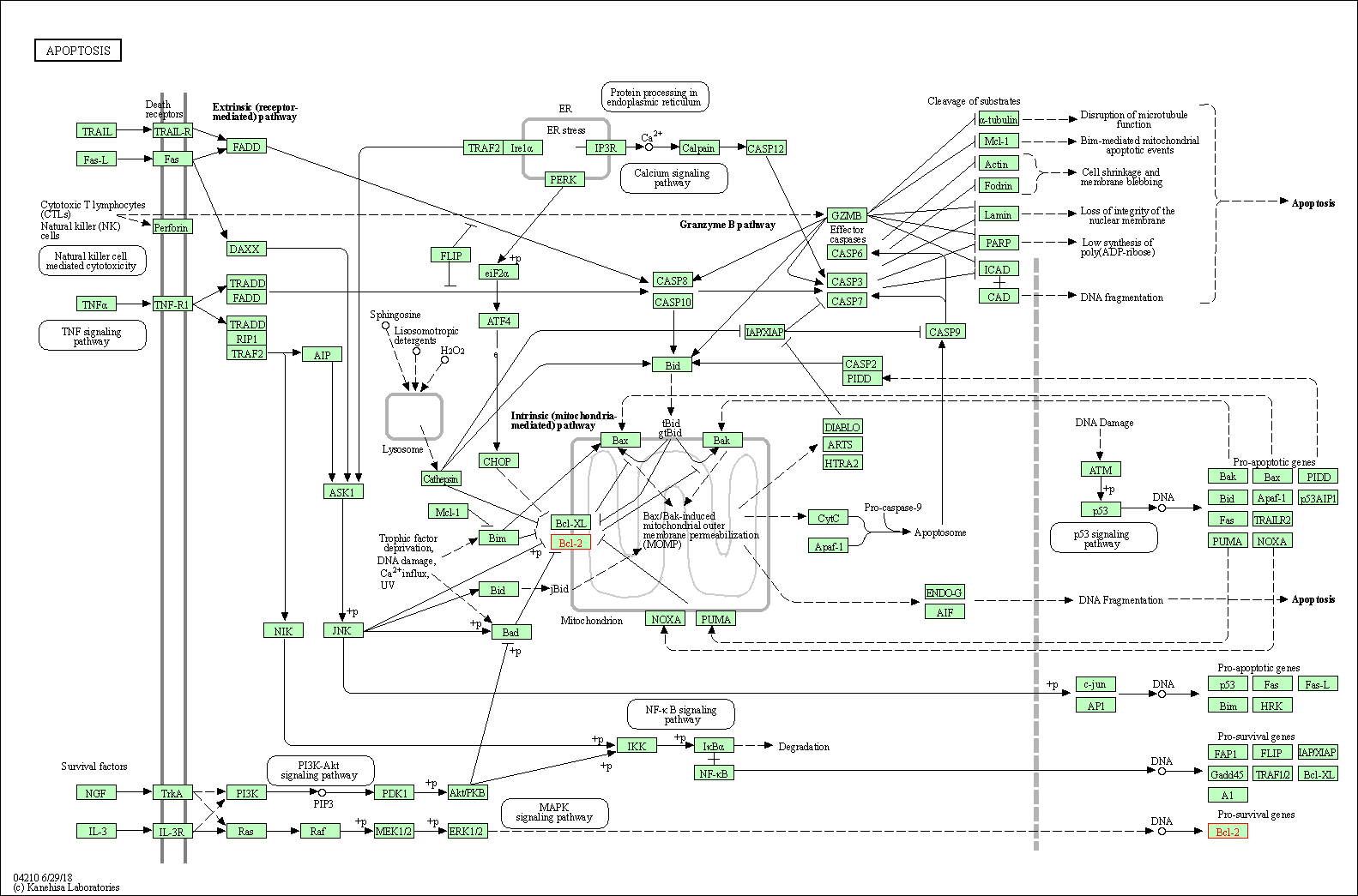
Down-regulation | Expression | BCL-2 | Molecule Info |
Pathway MAP
|
|
| Down-regulation | Expression | COX-2 | Molecule Info |
Pathway MAP
|
||
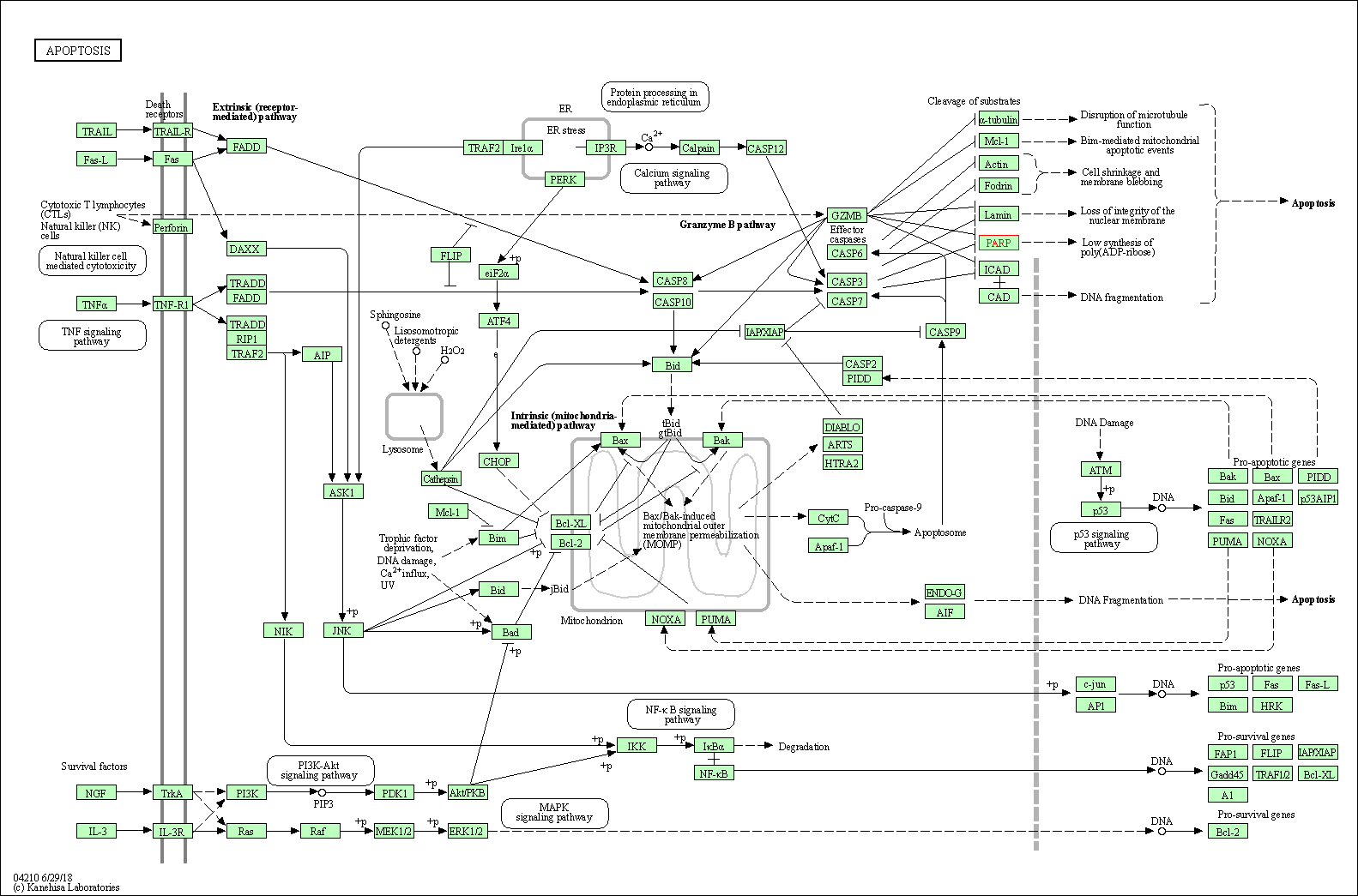
| Up-regulation | Cleavage | PARP1 | Molecule Info |
Pathway MAP
|
||
| Up-regulation | Expression | TP53 | Molecule Info |
Pathway MAP
|
||
| In-vitro Model | Hep-G2 | CVCL_0027 | Hepatocellular carcinoma | Homo sapiens | ||
| In-vivo Model | Murine hepatoma 22 (H22) cells were diluted with icy 0.9% saline and inoculated subcutaneously at right axilla of mice (5*106 viable cells/mL). | |||||
| Experimental
Result(s) |
The anti-hepatocellular carcinoma effects in vitro and in vivo of 5-FU and oroxylin A combinations were synergistic and oroxylin A increased the sensitivity of HepG2 cells to 5-FU by modulating the metabolic enzymes of 5-FU and apoptotic-related proteins. | |||||
| β. A List of Drug(s) Whose Resistance can be Reversed by This NP | ||||||
| Cisplatin | Bladder cancer | Click to Show/Hide the Molecular Data of This Drug | ||||
| Reversing Drug Resistance | Click to Show/Hide | |||||
| Representative Experiment Reporting the Effect of This Combination | [3] | |||||
| Detail(s) |
Combination Info
click to show the detail info of this combination
|
|||||
| Molecule(s)
Regulation |
Down-regulation | Expression | XPC | Molecule Info |
Pathway MAP
|
|
| In-vitro Model | NCI-H460 | CVCL_0459 | Lung large cell carcinoma | Homo sapiens | ||
| A-549 | CVCL_0023 | Lung adenocarcinoma | Homo sapiens | |||
| PLA-801D | CVCL_7110 | Lung giant cell carcinoma | Homo sapiens | |||
| PC-9 | CVCL_B260 | Lung adenocarcinoma | Homo sapiens | |||
| HCC827 | CVCL_2063 | Lung adenocarcinoma | Homo sapiens | |||
| NCI-H1975 | CVCL_1511 | Lung adenocarcinoma | Homo sapiens | |||
| Experimental
Result(s) |
Oroxylin A reverses hypoxia-induced cisplatin resistance through inhibiting HIF-1alpha mediated XPC transcription. | |||||
| Target and Pathway | ||||
|---|---|---|---|---|
| Target(s) | Apoptosis regulator Bcl-2 (BCL-2) | Molecule Info | [4] | |
| Caspase-3 (CASP3) | Molecule Info | [5] | ||
| Cyclin-dependent kinase 7 (CDK7) | Molecule Info | [6] | ||
| KEGG Pathway | MAPK signaling pathway | Click to Show/Hide | ||
| 2 | p53 signaling pathway | |||
| 3 | Apoptosis | |||
| 4 | Natural killer cell mediated cytotoxicity | |||
| 5 | TNF signaling pathway | |||
| 6 | Serotonergic synapse | |||
| 7 | Non-alcoholic fatty liver disease (NAFLD) | |||
| 8 | Alzheimer's disease | |||
| 9 | Parkinson's disease | |||
| 10 | Amyotrophic lateral sclerosis (ALS) | |||
| 11 | Huntington's disease | |||
| 12 | Epithelial cell signaling in Helicobacter pylori infection | |||
| 13 | Pertussis | |||
| 14 | Legionellosis | |||
| 15 | Toxoplasmosis | |||
| 16 | Amoebiasis | |||
| 17 | Tuberculosis | |||
| 18 | Hepatitis B | |||
| 19 | Herpes simplex infection | |||
| 20 | Pathways in cancer | |||
| 21 | Viral carcinogenesis | |||
| 22 | Proteoglycans in cancer | |||
| 23 | MicroRNAs in cancer | |||
| 24 | Colorectal cancer | |||
| 25 | Viral myocarditis | |||
| 26 | NF-kappa B signaling pathway | |||
| 27 | HIF-1 signaling pathway | |||
| 28 | Sphingolipid signaling pathway | |||
| 29 | Protein processing in endoplasmic reticulum | |||
| 30 | PI3K-Akt signaling pathway | |||
| 31 | Adrenergic signaling in cardiomyocytes | |||
| 32 | Focal adhesion | |||
| 33 | Neurotrophin signaling pathway | |||
| 34 | Cholinergic synapse | |||
| 35 | Epstein-Barr virus infection | |||
| 36 | Prostate cancer | |||
| 37 | Small cell lung cancer | |||
| 38 | Basal transcription factors | |||
| 39 | Nucleotide excision repair | |||
| 40 | Cell cycle | |||
| NetPath Pathway | TCR Signaling Pathway | Click to Show/Hide | ||
| 2 | IL2 Signaling Pathway | |||
| 3 | IL4 Signaling Pathway | |||
| 4 | IL5 Signaling Pathway | |||
| 5 | IL3 Signaling Pathway | |||
| 6 | Leptin Signaling Pathway | |||
| 7 | RANKL Signaling Pathway | |||
| 8 | TSLP Signaling Pathway | |||
| Panther Pathway | Apoptosis signaling pathway | Click to Show/Hide | ||
| 2 | FAS signaling pathway | |||
| 3 | Huntington disease | |||
| 4 | CCKR signaling map ST | |||
| 5 | Oxidative stress response | |||
| Pathway Interaction Database | LPA receptor mediated events | Click to Show/Hide | ||
| 2 | Calcineurin-regulated NFAT-dependent transcription in lymphocytes | |||
| 3 | FAS (CD95) signaling pathway | |||
| 4 | Role of Calcineurin-dependent NFAT signaling in lymphocytes | |||
| 5 | Posttranslational regulation of adherens junction stability and dissassembly | |||
| 6 | p75(NTR)-mediated signaling | |||
| 7 | HIV-1 Nef: Negative effector of Fas and TNF-alpha | |||
| 8 | Caspase Cascade in Apoptosis | |||
| 9 | Syndecan-2-mediated signaling events | |||
| 10 | IL2-mediated signaling events | |||
| 11 | IL2 signaling events mediated by PI3K | |||
| 12 | Ceramide signaling pathway | |||
| 13 | Direct p53 effectors | |||
| 14 | RXR and RAR heterodimerization with other nuclear receptor | |||
| 15 | ATF-2 transcription factor network | |||
| 16 | C-MYB transcription factor network | |||
| 17 | Signaling events mediated by Stem cell factor receptor (c-Kit) | |||
| 18 | EPO signaling pathway | |||
| 19 | IL2 signaling events mediated by STAT5 | |||
| 20 | Validated targets of C-MYC transcriptional repression | |||
| 21 | Retinoic acid receptors-mediated signaling | |||
| Reactome | SMAC binds to IAPs | Click to Show/Hide | ||
| 2 | SMAC-mediated dissociation of IAP:caspase complexes | |||
| 3 | Apoptotic cleavage of cellular proteins | |||
| 4 | Degradation of the extracellular matrix | |||
| 5 | NADE modulates death signalling | |||
| 6 | Activation of DNA fragmentation factor | |||
| 7 | Caspase-mediated cleavage of cytoskeletal proteins | |||
| 8 | Activation of BAD and translocation to mitochondria | |||
| 9 | BH3-only proteins associate with and inactivate anti-apoptotic BCL-2 members | |||
| 10 | The NLRP1 inflammasome | |||
| 11 | NoRC negatively regulates rRNA expression | |||
| 12 | Formation of TC-NER Pre-Incision Complex | |||
| 13 | Dual incision in TC-NER | |||
| 14 | Gap-filling DNA repair synthesis and ligation in TC-NER | |||
| 15 | Cyclin E associated events during G1/S transition | |||
| 16 | Cyclin D associated events in G1 | |||
| 17 | Cyclin A/B1 associated events during G2/M transition | |||
| 18 | Cyclin A:Cdk2-associated events at S phase entry | |||
| 19 | RNA Polymerase I Transcription Initiation | |||
| WikiPathways | DNA Damage Response | Click to Show/Hide | ||
| 2 | SIDS Susceptibility Pathways | |||
| 3 | Apoptosis Modulation by HSP70 | |||
| 4 | MAPK Signaling Pathway | |||
| 5 | Copper homeostasis | |||
| 6 | FAS pathway and Stress induction of HSP regulation | |||
| 7 | Signaling by Hippo | |||
| 8 | Apoptosis | |||
| 9 | Amyotrophic lateral sclerosis (ALS) | |||
| 10 | Spinal Cord Injury | |||
| 11 | BDNF signaling pathway | |||
| 12 | Integrated Pancreatic Cancer Pathway | |||
| 13 | Oncostatin M Signaling Pathway | |||
| 14 | Parkinsons Disease Pathway | |||
| 15 | Corticotropin-releasing hormone | |||
| 16 | Allograft Rejection | |||
| 17 | AGE/RAGE pathway | |||
| 18 | TNF alpha Signaling Pathway | |||
| 19 | Prostate Cancer | |||
| 20 | Alzheimers Disease | |||
| 21 | TWEAK Signaling Pathway | |||
| 22 | Integrated Breast Cancer Pathway | |||
| 23 | Signalling by NGF | |||
| 24 | Integrated Cancer pathway | |||
| 25 | Regulation of Apoptosis | |||
| 26 | Intrinsic Pathway for Apoptosis | |||
| 27 | Apoptotic execution phase | |||
| 28 | Apoptosis Modulation and Signaling | |||
| 29 | miRNA Regulation of DNA Damage Response | |||
| 30 | DNA Damage Response (only ATM dependent) | |||
| 31 | Senescence and Autophagy in Cancer | |||
| 32 | IL-2 Signaling Pathway | |||
| 33 | Focal Adhesion | |||
| 34 | Kit receptor signaling pathway | |||
| 35 | IL-3 Signaling Pathway | |||
| 36 | Nucleotide-binding domain, leucine rich repeat containing receptor (NLR) signaling pathways | |||
| 37 | Nanoparticle triggered autophagic cell death | |||
| 38 | Interleukin-11 Signaling Pathway | |||
| 39 | miR-targeted genes in muscle cell - TarBase | |||
| 40 | miR-targeted genes in lymphocytes - TarBase | |||
| 41 | miR-targeted genes in leukocytes - TarBase | |||
| 42 | TP53 Network | |||
| 43 | Influenza A virus infection | |||
| 44 | IL-5 Signaling Pathway | |||
| 45 | G1 to S cell cycle control | |||
| 46 | Eukaryotic Transcription Initiation | |||
| 47 | Cardiac Hypertrophic Response | |||
| 48 | S Phase | |||
| 49 | HIV Life Cycle | |||
| 50 | Nucleotide Excision Repair | |||
| 51 | RNA Polymerase II Transcription | |||
| 52 | RNA Polymerase I, RNA Polymerase III, and Mitochondrial Transcription | |||
| 53 | mRNA Capping | |||
| 54 | Mitotic G2-G2/M phases | |||
| 55 | Mitotic G1-G1/S phases | |||
| 56 | MicroRNAs in cardiomyocyte hypertrophy | |||