Natural Product (NP) Details
| General Information of the NP (ID: NP9520) | |||||
|---|---|---|---|---|---|
| Name |
Ginsenoside Rg3
|
||||
| Synonyms |
(20S)-ginsenoside Rg3
Click to Show/Hide
|
||||
| Species Origin | Panax ginseng ... | Click to Show/Hide | |||
| Panax ginseng | |||||
| Disease | Colorectal cancer [ICD-11: 2B91] | Investigative | [1] | ||
| Structure |

|
Click to Download Mol2D MOL |
|||
| ADMET Property |
Absporption
Caco-2 Permeability
-6.262
MDCK Permeability
-5.071
PAMPA
+++
HIA
+
Distribution
VDss
-0.482
PPB
73.5%
BBB
- - -
Metabolism
CYP1A2 inhibitor
- - -
CYP1A2 substrate
- - -
CYP2C19 inhibitor
- - -
CYP2C19 substrate
- -
CYP2C9 inhibitor
- - -
CYP2C9 substrate
- - -
CYP2D6 inhibitor
- - -
CYP2D6 substrate
- - -
CYP3A4 inhibitor
- - -
CYP3A4 substrate
- - -
CYP2B6 inhibitor
- - -
CYP2B6 substrate
- - -
CYP2C8 inhibitor
++
HLM Stability
- - -
Excretion
CLplasma
0.711
T1/2
2.309
Toxicity
DILI
-
Rat Oral Acute Toxicity
- - -
FDAMDD
- - -
Respiratory
- - -
Human Hepatotoxicity
++
Ototoxicity
+++
Drug-induced Nephrotoxicity
+++
Drug-induced Neurotoxicity
- - -
Hematotoxicity
++
Genotoxicity
- -
Tips: 1. For the classification endpoints, the prediction probability values are transformed into six symbols: 0-0.1 (- - -), 0.1-0.3 (- -), 0.3-0.5 (-), 0.5-0.7 (+), 0.7-0.9 (++), and 0.9-1.0 (+++).
2. Additionally, the corresponding relationships of the three labels are as follows: excellent; medium; poor.
Click to Show/Hide
|
||||
| Click to Show/Hide the Molecular Information and External Link(s) of This Natural Product | |||||
| Formula |
C42H72O13
|
||||
| PubChem CID | |||||
| Canonical SMILES |
CC(=CCCC(C)(C1CCC2(C1C(CC3C2(CCC4C3(CCC(C4(C)C)OC5C(C(C(C(O5)CO)O)O)OC6C(C(C(C(O6)CO)O)O)O)C)C)O)C)O)C
|
||||
| InChI |
1S/C42H72O13/c1-21(2)10-9-14-42(8,51)22-11-16-41(7)29(22)23(45)18-27-39(5)15-13-28(38(3,4)26(39)12-17-40(27,41)6)54-37-35(33(49)31(47)25(20-44)53-37)55-36-34(50)32(48)30(46)24(19-43)52-36/h10,22-37,43-51H,9,11-20H2,1-8H3/t22-,23+,24+,25+,26-,27+,28-,29-,30+,31+,32-,33-,34+,35+,36-,37-,39-,40+,41+,42-/m0/s1
|
||||
| InChIKey |
RWXIFXNRCLMQCD-JBVRGBGGSA-N
|
||||
| CAS Number |
CAS 14197-60-5
|
||||
| Herb ID | |||||
| ETMC ID | |||||
| SymMap ID | |||||
| TCMSP ID | |||||
| TTD Drug ID | |||||
| Combinatorial Therapeutic Effect(s) Validated Clinically or Experimentally | ||||||
|---|---|---|---|---|---|---|
| α. A List of Drug(s) Whose Efficacy can be Enhanced by This NP | ||||||
| Capecitabine | Colorectal cancer | Click to Show/Hide the Molecular Data of This Drug | ||||
| Augmenting Drug Sensitivity | Click to Show/Hide | |||||
| Representative Experiment Reporting the Effect of This Combination | [2] | |||||
| Detail(s) |
Combination Info
 click to show the detail info of this combination
|
|||||
| Molecule(s)
Regulation |
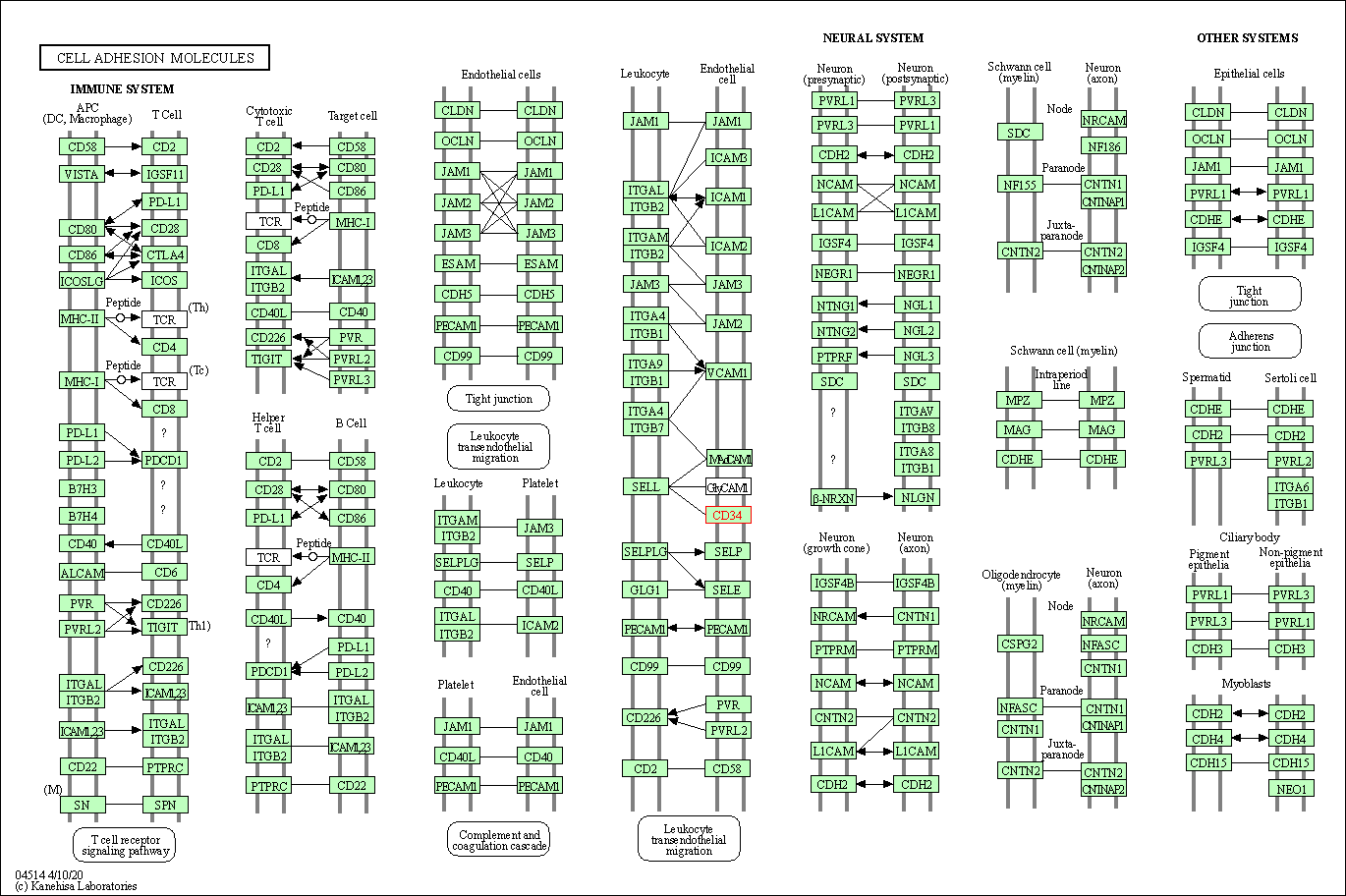
Down-regulation | Expression | CD34 | Molecule Info |
Pathway MAP
|
|
| Down-regulation | Expression | VEGFA | Molecule Info |
Pathway MAP
|
||
| In-vivo Model | 4T1 cells (1*106) were suspended in 0.1 mL of PBS and injected into the mammary fat pad in the right flank of each BALB/c mice. | |||||
| Experimental
Result(s) |
The study demonstrates the feasibility of delivering capecitabine and gensinoside Rg3 in a metronomic chemotherapy regimen, which is proved to be safe, effective, and potentially applicable to clinical treatment. | |||||
| Oxaliplatin | Colorectal cancer | Click to Show/Hide the Molecular Data of This Drug | ||||
| Achieving Therapeutic Synergy | Click to Show/Hide | |||||
| Representative Experiment Reporting the Effect of This Combination | [3] | |||||
| Detail(s) |
Combination Info
click to show the detail info of this combination
|
|||||
| Molecule(s)
Regulation |
Down-regulation | Expression | CCND1 | Molecule Info |
Pathway MAP
|
|
| Down-regulation | Expression | PCNA | Molecule Info |
Pathway MAP
|
||
| In-vitro Model | SMMC-7721 | CVCL_0534 | Hepatocellular carcinoma | Homo sapiens | ||
| Experimental
Result(s) |
Cells treated with oxaliplatin+ ginsenoside enhanced the anti-tumor effect and may inhibit the proliferation and promoted apoptosis of hepatocellular carcinoma via regulating the expression of PCNA and cyclin D1. | |||||
| Endostar | Solid tumour/cancer | Click to Show/Hide the Molecular Data of This Drug | ||||
| Achieving Therapeutic Synergy | Click to Show/Hide | |||||
| Representative Experiment Reporting the Effect of This Combination | [4] | |||||
| Detail(s) |
Combination Info
click to show the detail info of this combination
|
|||||
| Molecule(s)
Regulation |
Down-regulation | Expression | AKT1 | Molecule Info |
Pathway MAP
|
|
| Down-regulation | Expression | BECN1 | Molecule Info |
Pathway MAP
|
||
| Down-regulation | Expression | JNK1 | Molecule Info |
Pathway MAP
|
||
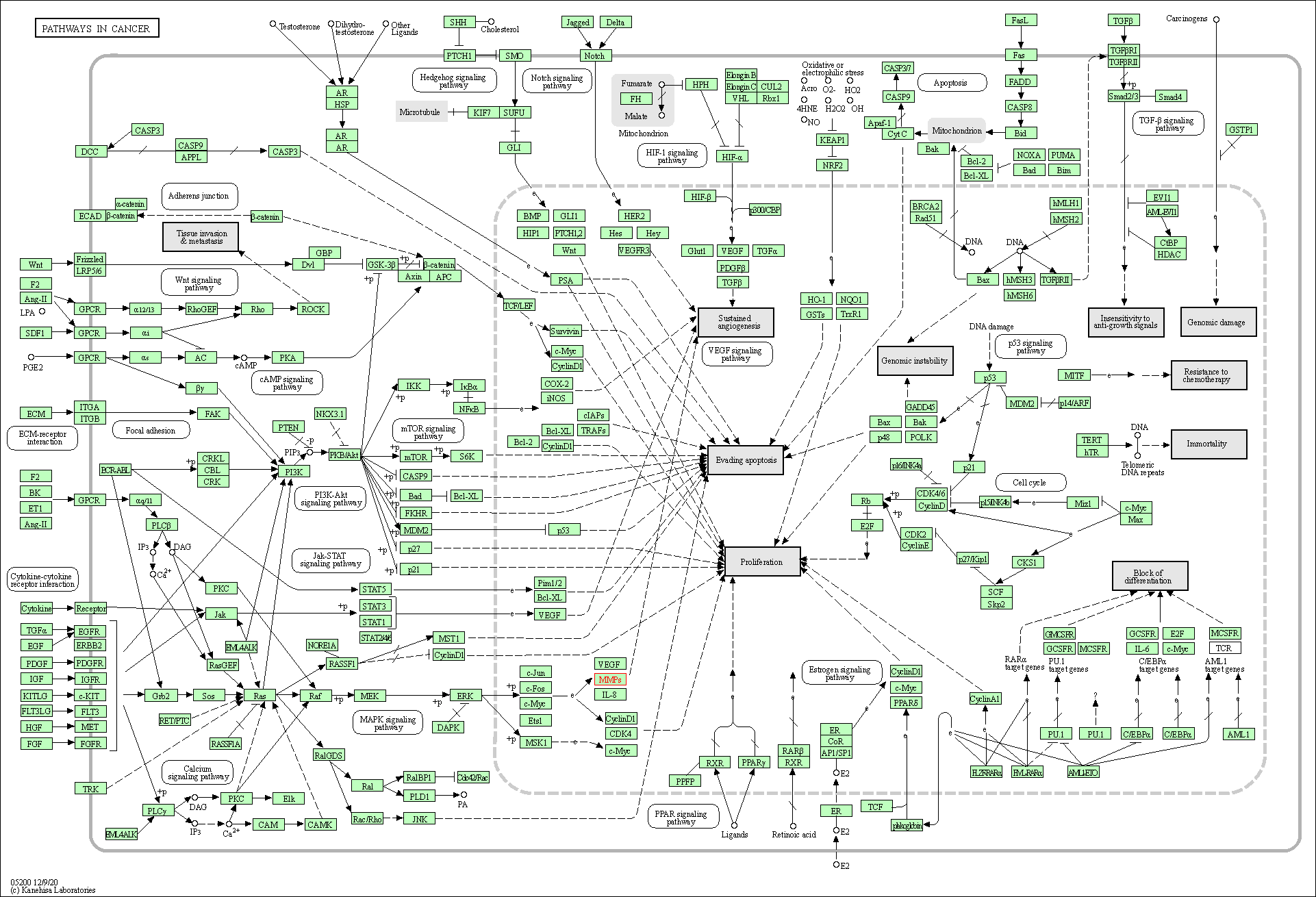
| Down-regulation | Expression | MMP-2 | Molecule Info |
Pathway MAP
|
||
| Down-regulation | Expression | MMP-9 | Molecule Info |
Pathway MAP
|
||
| Down-regulation | Expression | mTOR | Molecule Info |
Pathway MAP
|
||
| Down-regulation | Expression | PIK3CB | Molecule Info |
Pathway MAP
|
||
| Down-regulation | Expression | SQSTM1 | Molecule Info |
Pathway MAP
|
||
| Down-regulation | Expression | VEGFA | Molecule Info |
Pathway MAP
|
||
| Down-regulation | Expression | VEGFB | Molecule Info |
Pathway MAP
|
||
| Down-regulation | Expression | VEGFC | Molecule Info |
Pathway MAP
|
||
| In-vivo Model | MCF-7 cells were inoculated under right mammary gland of female C57 mice. | |||||
| Experimental
Result(s) |
Endostar combined with ginsenoside Rg3 has stronger inhibiting effect on breast cancer tumor growth in tumor-bearing mice than single drug, and it can inhibit angiogenesis and cell invasion, and enhance cell autophagy. | |||||
| Gemcitabine | Solid tumour/cancer | Click to Show/Hide the Molecular Data of This Drug | ||||
| Augmenting Drug Sensitivity | Click to Show/Hide | |||||
| Representative Experiment Reporting the Effect of This Combination | [5] | |||||
| Detail(s) |
Combination Info
click to show the detail info of this combination
|
|||||
| Molecule(s)
Regulation |
Down-regulation | Expression | PECAM1 | Molecule Info |
Pathway MAP
|
|
| Down-regulation | Expression | VEGFA | Molecule Info |
Pathway MAP
|
||
| In-vivo Model | 0.2 mL Lewis lung carcinoma cell suspensions (1*107/mL) were injected subcutaneously into the armpit of right anterior superior limbs of female C57BL/6 mice. | |||||
| Experimental
Result(s) |
Ginsenoside Rg3 combined with gemcitabine may significantly inhibit angiogenesis and growth of lung cancer and improve survival and quality of life of tumor-bearing mice. | |||||
| Cyclophosphamide | Solid tumour/cancer | Click to Show/Hide the Molecular Data of This Drug | ||||
| Augmenting Drug Sensitivity | Click to Show/Hide | |||||
| Representative Experiment Reporting the Effect of This Combination | [6] | |||||
| Detail(s) |
Combination Info
click to show the detail info of this combination
|
|||||
| In-vivo Model | Lewis lung carcinoma (1*106/0.1 mL) was inoculated subcutaneously in the right flank of each C57/BL6 mouse. | |||||
| Experimental
Result(s) |
Continuous low-dose regimen of CTX increases the efficacy of targeting the tumor microvasculature, which produces therapeutic activity with decreased toxicity. | |||||
| Target and Pathway | ||||
|---|---|---|---|---|
| Target(s) | Potassium channel H2 Kv11.1 (KCNH2) | Molecule Info | [7] | |
| Pathwhiz Pathway | Muscle/Heart Contraction | Click to Show/Hide | ||
| Reactome | Voltage gated Potassium channels | Click to Show/Hide | ||
| WikiPathways | SIDS Susceptibility Pathways | Click to Show/Hide | ||
| 2 | Hematopoietic Stem Cell Differentiation | |||
| 3 | Potassium Channels | |||