Drug Details
| General Information of the Drug (ID: DR0683) | ||||
|---|---|---|---|---|
| Name |
Thioridazine
|
|||
| Synonyms |
Aldazine; Mallorol; Malloryl; Meleril; Mellaril; Mellarit; Mellerets; Mellerette; Melleretten; Melleril; Melleryl; Metlaril; Novoridazine; Orsanil; Ridazine; Sonapax; Stalleril; Thioridazin; Thioridazinum; Thioxidazine; Tioridazin; Tioridazina; Thioridazine Hcl; Thioridazine Hcl Intensol; Thioridazine prolongatum; Thoridazine hydrochloride; Dl-Thioridazine; Mellaril (TN); Mellaril-S; Melleril (liquid); Novoridazine (TN); TP-21; Thioridazine, prolongatum; Thioridazinum [INN-Latin]; Thioril (TN); Tioridazina [INN-Spanish]; Mellaril-S (TN); Thioridazine (USP/INN); Thioridazine [USAN:INN:BAN]; Mellaril (*Hydrochloride*); (+-)-Thioridazine; 10-(2-(1-Methyl-2-piperidyl)ethyl)-2-(methylthio)phenothiazine; 10-[2-(1-methyl-2-piperidyl)ethyl]-2-methylsulfanyl-phenothiazine; 10-[2-(1-methylpiperidin-2-yl)ethyl]-2-(methylsulfanyl)-10H-phenothiazine; 10-[2-(1-methylpiperidin-2-yl)ethyl]-2-(methylthio)-10H-phenothiazine; 10-[2-(1-methylpiperidin-2-yl)ethyl]-2-methylsulfanylphenothiazine; 2-Methylmercapto-10-(2-(N-methyl-2-piperidyl)ethyl)phenothiazine; 3-Methylmercapto-N-(2'-(N-methyl-2-piperidyl)ethyl)phenothiazine
Click to Show/Hide
|
|||
| Molecular Type |
Small molecule
|
|||
| Disease | Schizophrenia [ICD-11: 6A20] | Approved | [1] | |
| Structure |

|
Click to Download Mol2D MOL |
||
| ADMET Property |
Absorption
The absorption of drug is 60%
BDDCS Class
Biopharmaceutics Drug Disposition Classification System (BDDCS) Class 1: high solubility and high permeability
Half-life
The concentration or amount of drug in body reduced by one-half in 21 - 25 hours
Metabolism
The drug is metabolized via the hepatic
MRTD
The Maximum Recommended Therapeutic Dose (MRTD) of drug that ensured maximising efficacy and moderate side effect is 35.88942 micromolar/kg/day
Water Solubility
The ability of drug to dissolve in water is measured as 1 mg/mL
Click to Show/Hide
|
|||
| Click to Show/Hide the Molecular Information and External Link(s) of This Natural Product | ||||
| Formula |
C21H26N2S2
|
|||
| PubChem CID | ||||
| Canonical SMILES |
CN1CCCCC1CCN2C3=CC=CC=C3SC4=C2C=C(C=C4)SC
|
|||
| InChI |
1S/C21H26N2S2/c1-22-13-6-5-7-16(22)12-14-23-18-8-3-4-9-20(18)25-21-11-10-17(24-2)15-19(21)23/h3-4,8-11,15-16H,5-7,12-14H2,1-2H3
|
|||
| InChIKey |
KLBQZWRITKRQQV-UHFFFAOYSA-N
|
|||
| CAS Number |
CAS 50-52-2
|
|||
| ChEBI ID | ||||
| TTD Drug ID | ||||
| DrugBank ID | ||||
| Combinatorial Therapeutic Effect(s) Validated Clinically or Experimentally | ||||||
|---|---|---|---|---|---|---|
| α. A List of Natural Product(s) Able to Enhance the Efficacy of This Drug | ||||||
| Curcumin | Hellenia speciosa | Click to Show/Hide the Molecular Data of This NP | ||||
| Augmenting Drug Sensitivity | Click to Show/Hide | |||||
| Representative Experiment Reporting the Effect of This Combination | [2] | |||||
| Detail(s) |
Combination Info
 click to show the detail info of this combination
|
|||||
| Molecule(s)
Regulation |
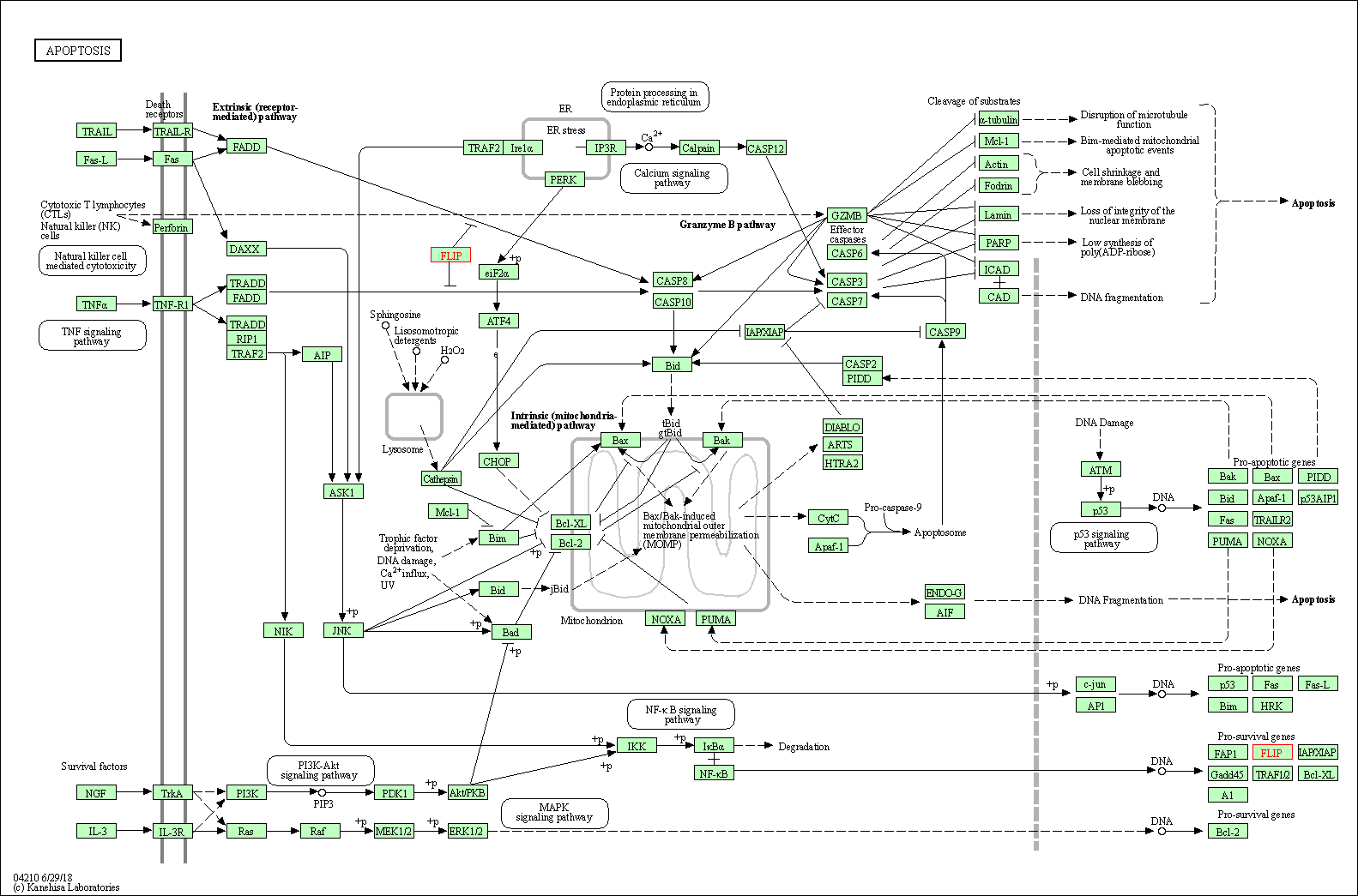
Down-regulation | Expression | CFLAR | Molecule Info |
Pathway MAP
|
|
| Up-regulation | Expression | GABPA | Molecule Info | |||
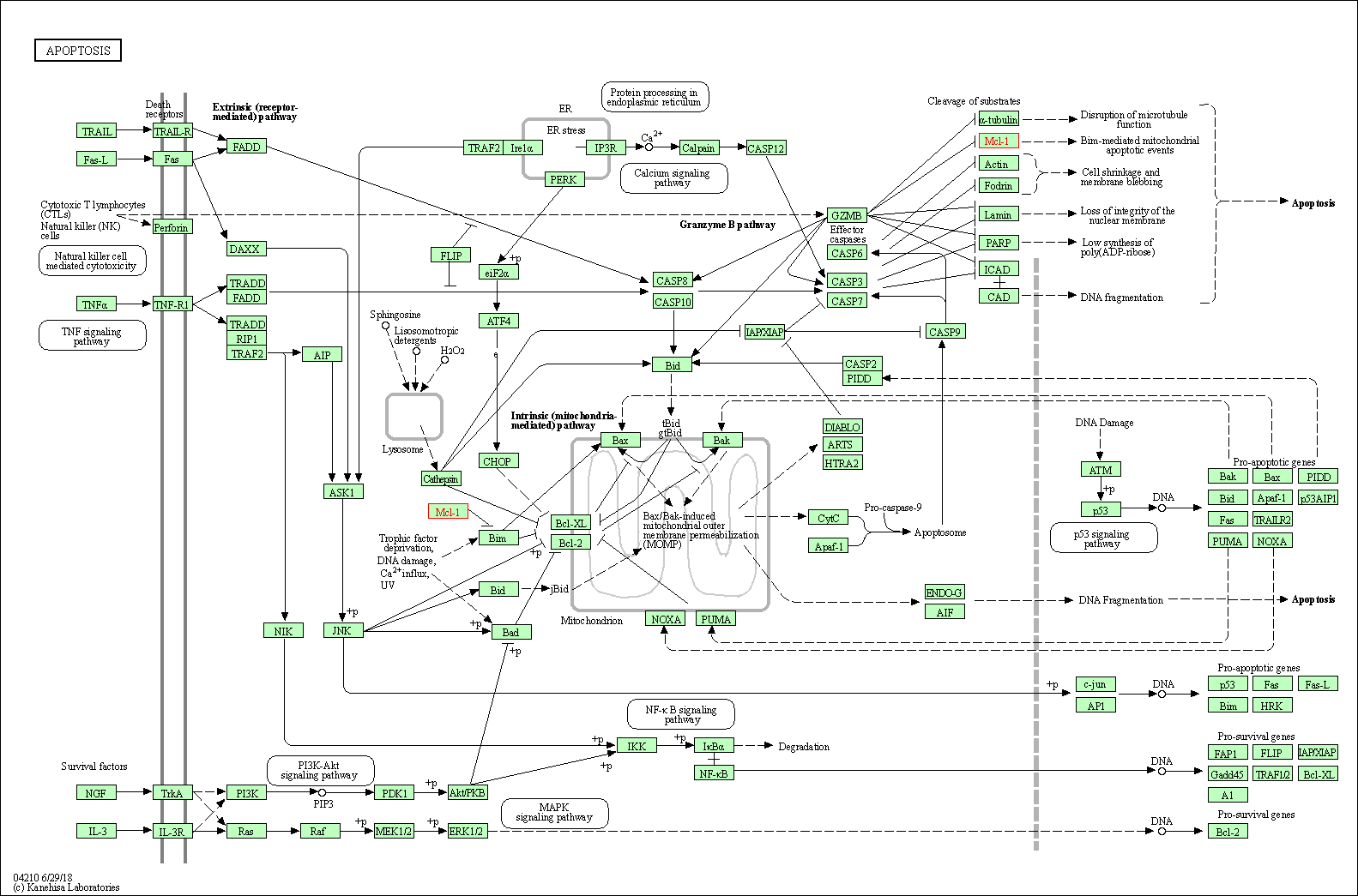
| Down-regulation | Expression | MCL1 | Molecule Info |
Pathway MAP
|
||
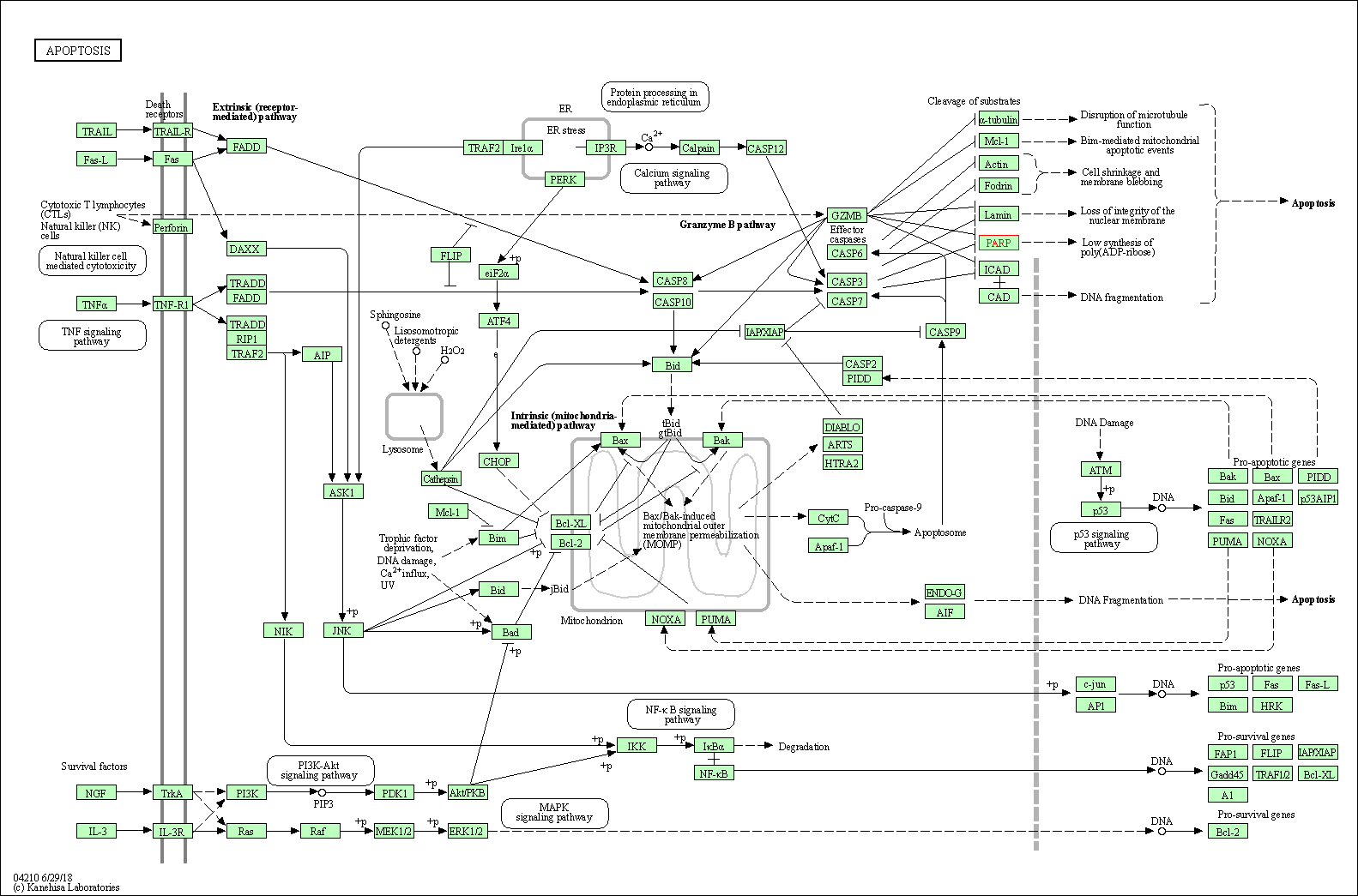
| Up-regulation | Cleavage | PARP1 | Molecule Info |
Pathway MAP
|
||
| Up-regulation | Cleavage | PARP1 | Molecule Info |
Pathway MAP
|
||
| Up-regulation | Expression | PSMA5 | Molecule Info |
Pathway MAP
|
||
| Biological
Regulation |
Induction | ROS generation | ||||
| In-vitro Model | AMC-HN-4 | CVCL_5962 | Tongue squamous cell carcinoma | Homo sapiens | ||
| Experimental
Result(s) |
Thioridazine plus curcumin induces proteasome activity by up-regulating PSMA5 expression via NOX4-mediated ROS production and that down-regulation of c-FLIP and Mcl-1 expression post-translationally is involved in apoptosis. | |||||
| Target and Pathway | ||||
|---|---|---|---|---|
| Target(s) | Dopamine D2 receptor (D2R) | Molecule Info | [3] | |
| KEGG Pathway | Rap1 signaling pathway | Click to Show/Hide | ||
| 2 | cAMP signaling pathway | |||
| 3 | Neuroactive ligand-receptor interaction | |||
| 4 | Gap junction | |||
| 5 | Dopaminergic synapse | |||
| 6 | Parkinson's disease | |||
| 7 | Cocaine addiction | |||
| 8 | Alcoholism | |||
| Panther Pathway | Heterotrimeric G-protein signaling pathway-Gi alpha and Gs alpha mediated pathway | Click to Show/Hide | ||
| 2 | Heterotrimeric G-protein signaling pathway-Gq alpha and Go alpha mediated pathway | |||
| 3 | Dopamine receptor mediated signaling pathway | |||
| 4 | Nicotine pharmacodynamics pathway | |||
| Reactome | Dopamine receptors | Click to Show/Hide | ||
| 2 | G alpha (i) signalling events | |||
| WikiPathways | Hypothetical Network for Drug Addiction | Click to Show/Hide | ||
| 2 | Monoamine GPCRs | |||
| 3 | GPCRs, Class A Rhodopsin-like | |||
| 4 | Genes and (Common) Pathways Underlying Drug Addiction | |||
| 5 | GPCR ligand binding | |||
| 6 | GPCR downstream signaling | |||
| 7 | Nicotine Activity on Dopaminergic Neurons | |||