Drug Details
| General Information of the Drug (ID: DR7876) | ||||
|---|---|---|---|---|
| Name |
Cytarabine
|
|||
| Synonyms |
Alexan; AraC; Arabinocytidine; Arabinofuranosylcytosine; Arabinosylcytosine; Arabitin; Aracytidine; Aracytin; Aracytine; Arafcyt; Citarabina; Cytarabin; Cytarabina; Cytarabinoside; Cytarabinum; Cytarbel; Cytonal; Cytosar; Cytosinearabinoside; DepoCyte; Depocyt; Erpalfa; Iretin; Spongocytidine; Tarabine; Udicil; Arabinosyl Cytosine; Cytarabine liposome injection; Cytosine arabinofuranoside; Cytosine arabinose; Cytosine arabinoside; AR3; BTB15125; CHX 3311; U 19920A; Ara-C; Ara-Cytidine; Beta-Ara C; Beta-Arabinosylcytosine; Beta-cytosine arabinoside; Citarabina [INN-Spanish]; Cytarabinum [INN-Latin]; Cytosar-U; Cytosine arabinoside (VAN); Depocyt (TN); Depocyt (liposomal); Intrathecal (injected into the spinal fluid) DepoCyt; U-19920; Beta-D-Arabinosylcytosine; Cytosar-U (TN); Cytosine beta-D-arabinofuranoside; Cytosine beta-D-arabinofuranoside hydrochloride; Cytosine beta-D-arabinoside; Cytosine-beta-arabinoside; Intrathecal cytarabine (also known as ara-C); U-19,920; CYTARABINE (SEE ALSO CYTARABINE HYDROCHLORIDE 69-74-9); Cytarabine (JP15/USP/INN); Cytarabine [USAN:INN:BAN:JAN]; Cytosine 1-beta-D-arabinofuranoside; Cytosine, beta-D-arabinoside; Cytosine-beta-D-arabinofuranoside; Cytosine-1-beta-D-arabinofuranoside; Ara-C, Cytosine Arabinoside, Cytosar-U, Cytarabine; (beta-D-Arabinofuranosyl)cytosine; 1-.beta.-D-arabinofuranosyl-cytosine; 1-Arabinofuranosylcytosine; 1-beta-D-Arabinofaranosylcytosine; 1-beta-D-Arabinofuranosyl-4-amino-2(1H)pyrimidinone; 1-beta-D-Arabinofuranosylcytosine; 1-beta-D-Arabinofuranosylcytosine, Cytosine Arabinoside; 1-beta-D-Arabinosylcytosine; 1beta-Arabinofuranasylcytosine; 1beta-D-Arabinofuranosylcytosine; 1beta-D-Arabinosylcytosine; 2(1H)-Pyrimidinone, 4-amino-1-D-arabinofuranosyl-[CAS]; 4-Amino-1-arabinofuranosyl-2-oxo-1,2-dihydropyrimidin; 4-Amino-1-arabinofuranosyl-2-oxo-1,2-dihydropyrimidin [Czech]; 4-Amino-1-arabinofuranosyl-2-oxo-1,2-dihydropyrimidine; 4-Amino-1-b-D-arabinofuranosyl-2-(1H)-pyrimidinone; 4-Amino-1-beta-D-arabinofuranosyl-2(1H)-pyrimidinon; 4-Amino-1-beta-D-arabinofuranosyl-2(1H)-pyrimidinon [Czech]; 4-Amino-1-beta-D-arabinofuranosyl-2(1H)-pyrimidinone; 4-amino-1-[(2R,3S,4S,5R)-3,4-dihydroxy-5-(hydroxymethyl)oxolan-2-yl]pyrimidin-2-one; 4-amino-1-beta-D-arabinofuranosylpyrimidin-2(1H)-one
Click to Show/Hide
|
|||
| Molecular Type |
Small molecule
|
|||
| Disease | Mantle cell lymphoma [ICD-11: 2A85] | Approved | [1] | |
| Structure |

|
Click to Download Mol2D MOL |
||
| ADMET Property |
Absorption
The absorption of drug is less than 20% from the gastrointestinal tract
BDDCS Class
Biopharmaceutics Drug Disposition Classification System (BDDCS) Class 1: high solubility and high permeability
Clearance
The drug present in the plasma can be removed from the body at the rate of 41.67 mL/min/kg
Elimination
11% of drug is excreted from urine in the unchanged form
Half-life
The concentration or amount of drug in body reduced by one-half in 10 minutes
Metabolism
The drug is metabolized via the hepatic
MRTD
The Maximum Recommended Therapeutic Dose (MRTD) of drug that ensured maximising efficacy and moderate side effect is 11.10101 micromolar/kg/day
Unbound Fraction
The unbound fraction of drug in plasma is 0.87%
Vd
Fluid volume that would be required to contain the amount of drug present in the body at the same concentration as in the plasma 0.67 L/kg
Click to Show/Hide
|
|||
| Click to Show/Hide the Molecular Information and External Link(s) of This Natural Product | ||||
| Formula |
C9H13N3O5
|
|||
| PubChem CID | ||||
| Canonical SMILES |
C1=CN(C(=O)N=C1N)C2C(C(C(O2)CO)O)O
|
|||
| InChI |
1S/C9H13N3O5/c10-5-1-2-12(9(16)11-5)8-7(15)6(14)4(3-13)17-8/h1-2,4,6-8,13-15H,3H2,(H2,10,11,16)/t4-,6-,7+,8-/m1/s1
|
|||
| InChIKey |
UHDGCWIWMRVCDJ-CCXZUQQUSA-N
|
|||
| CAS Number |
CAS 147-94-4
|
|||
| ChEBI ID | ||||
| GDSC | ||||
| TTD Drug ID | ||||
| DrugBank ID | ||||
| Combinatorial Therapeutic Effect(s) Validated Clinically or Experimentally | ||||||
|---|---|---|---|---|---|---|
| α. A List of Natural Product(s) Able to Enhance the Efficacy of This Drug | ||||||
| Aclarubicin | Streptomyces galilaeus | Click to Show/Hide the Molecular Data of This NP | ||||
| Achieving Therapeutic Synergy | Click to Show/Hide | |||||
| Representative Experiment Reporting the Effect of This Combination | [2] | |||||
| Detail(s) |
Combination Info
 click to show the detail info of this combination
|
|||||
| Experimental
Result(s) |
Increasing the dose of aclarubicin in CAG regimen seemed to be useful and relatively safe in relapsed and refractory AML. | |||||
| Curcumin | Hellenia speciosa | Click to Show/Hide the Molecular Data of This NP | ||||
| Achieving Therapeutic Synergy | Click to Show/Hide | |||||
| Representative Experiment Reporting the Effect of This Combination | [3] | |||||
| Detail(s) |
Combination Info
click to show the detail info of this combination
|
|||||
| Molecule(s)
Regulation |
Down-regulation | Expression | ABCB1 | Molecule Info |
Pathway MAP
|
|
| In-vitro Model | Bone marrow samples from newly diagnosed AML patients | Acute myeloid leukemia | Homo sapiens | |||
| Experimental
Result(s) |
Curcumin down regulates MDR genes. Curcumin can be used as MDR modulator as well as chemosensitizer in combination with cytarabine to reduce the cytotoxicity profile as IC50 value decreases when treated in combination. | |||||
| Emodin | Oplopanax elatus | Click to Show/Hide the Molecular Data of This NP | ||||
| Augmenting Drug Sensitivity | Click to Show/Hide | |||||
| Representative Experiment Reporting the Effect of This Combination | [4] | |||||
| Detail(s) |
Combination Info
click to show the detail info of this combination
|
|||||
| Molecule(s)
Regulation |
Down-regulation | Phosphorylation | AKT1 | Molecule Info |
Pathway MAP
|
|
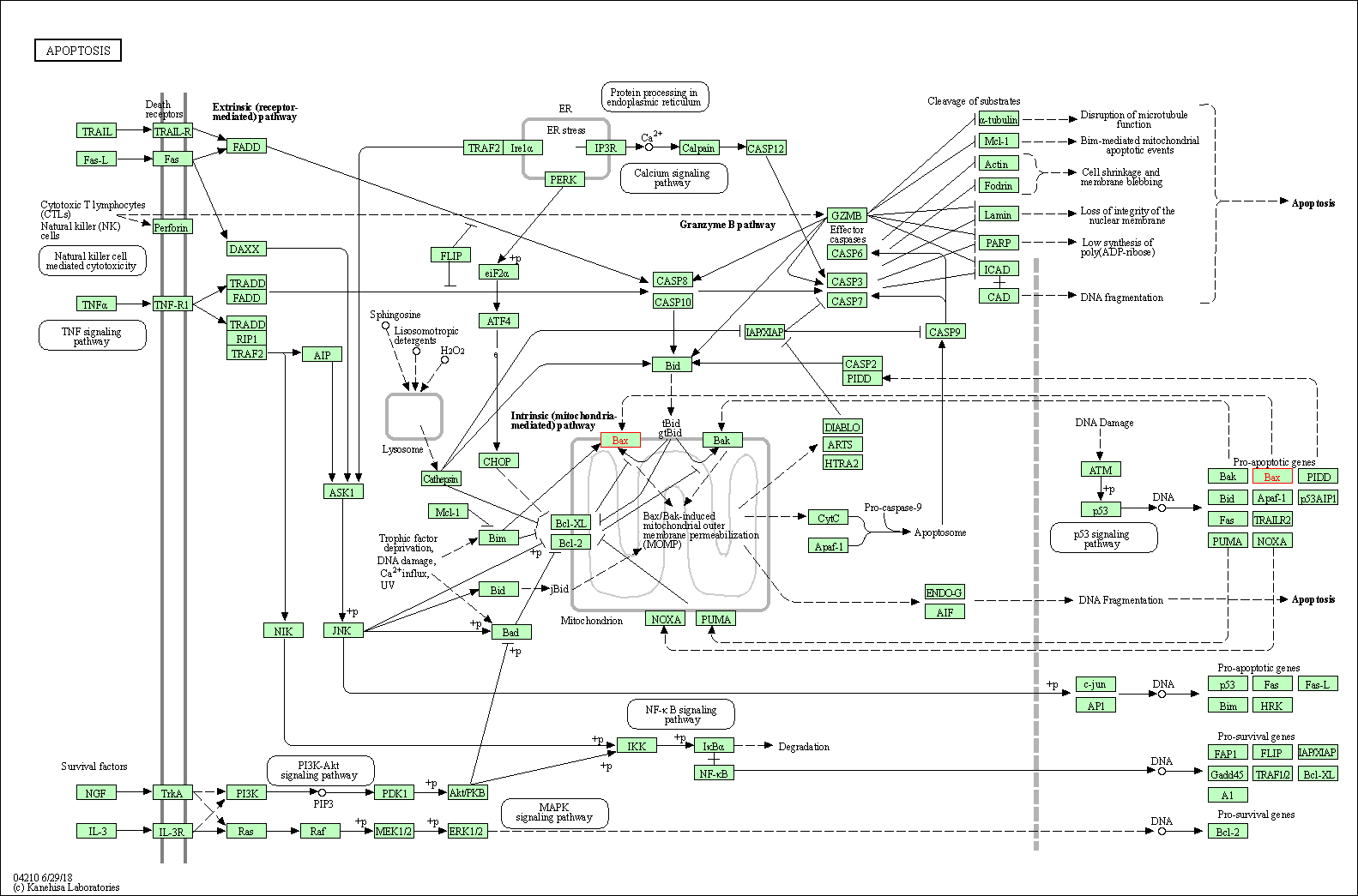
| Up-regulation | Expression | BAX | Molecule Info |
Pathway MAP
|
||
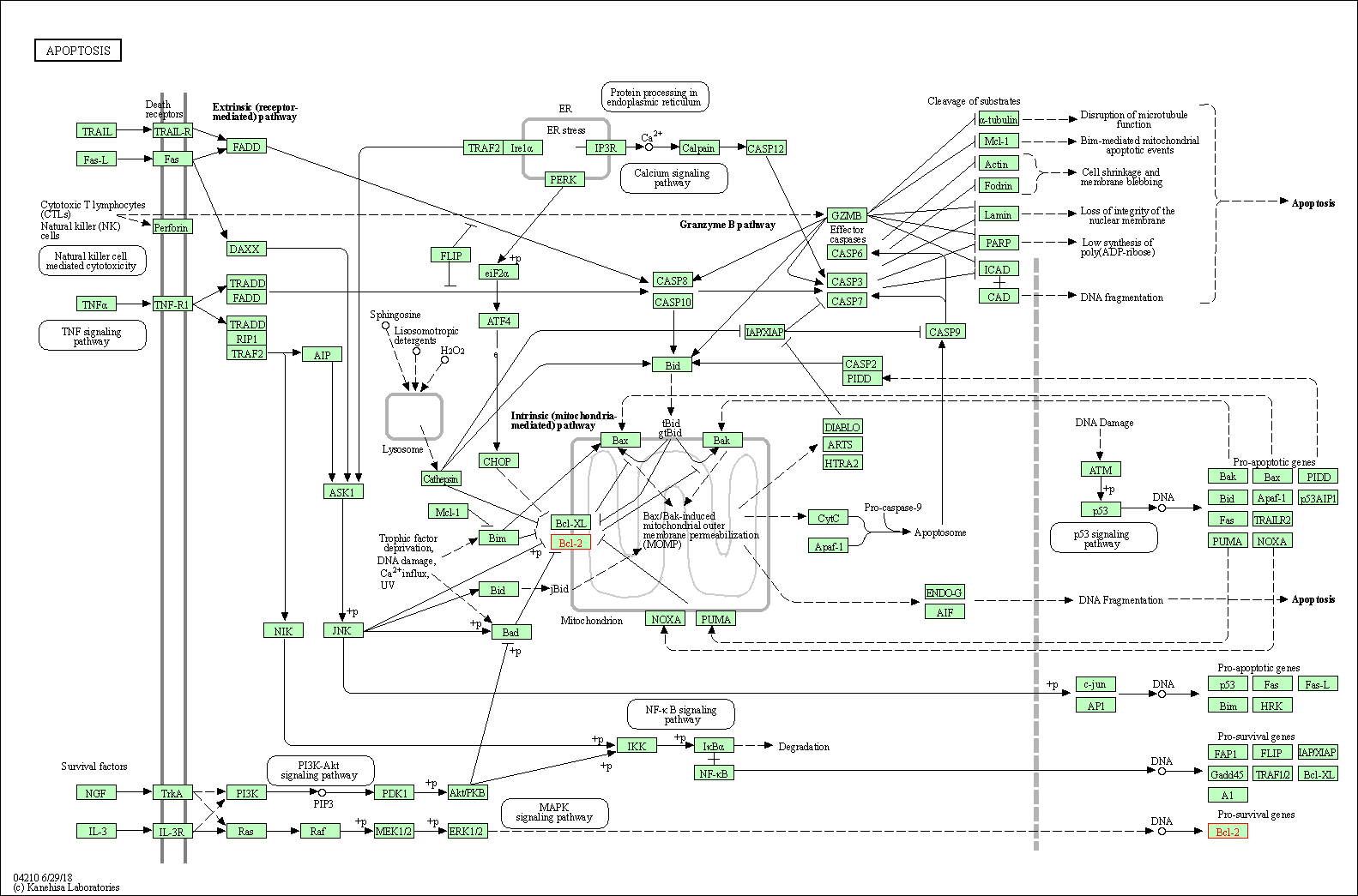
| Down-regulation | Expression | BCL-2 | Molecule Info |
Pathway MAP
|
||
| Down-regulation | Expression | BID | Molecule Info |
Pathway MAP
|
||
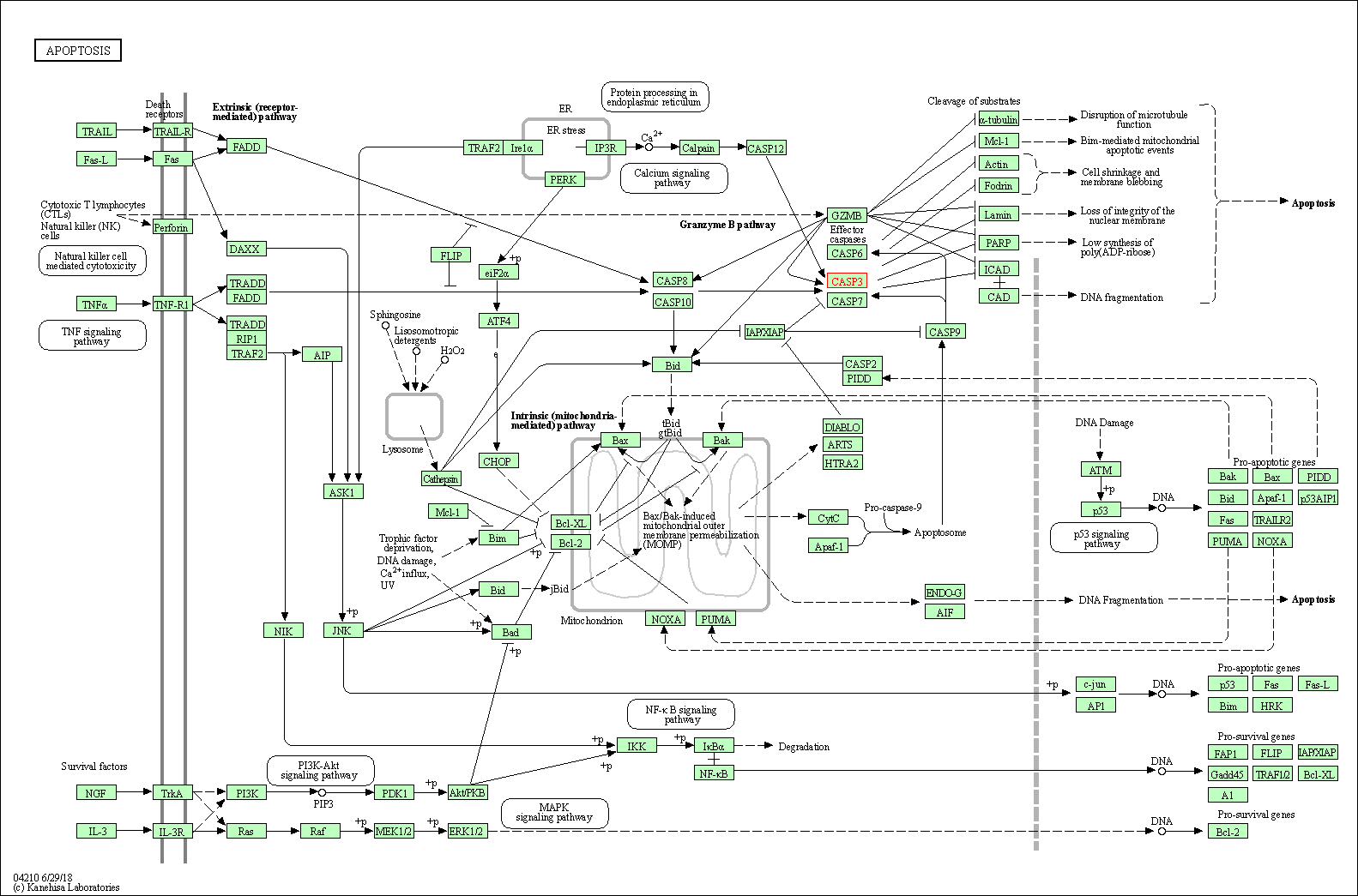
| Up-regulation | Cleavage | CASP3 | Molecule Info |
Pathway MAP
|
||
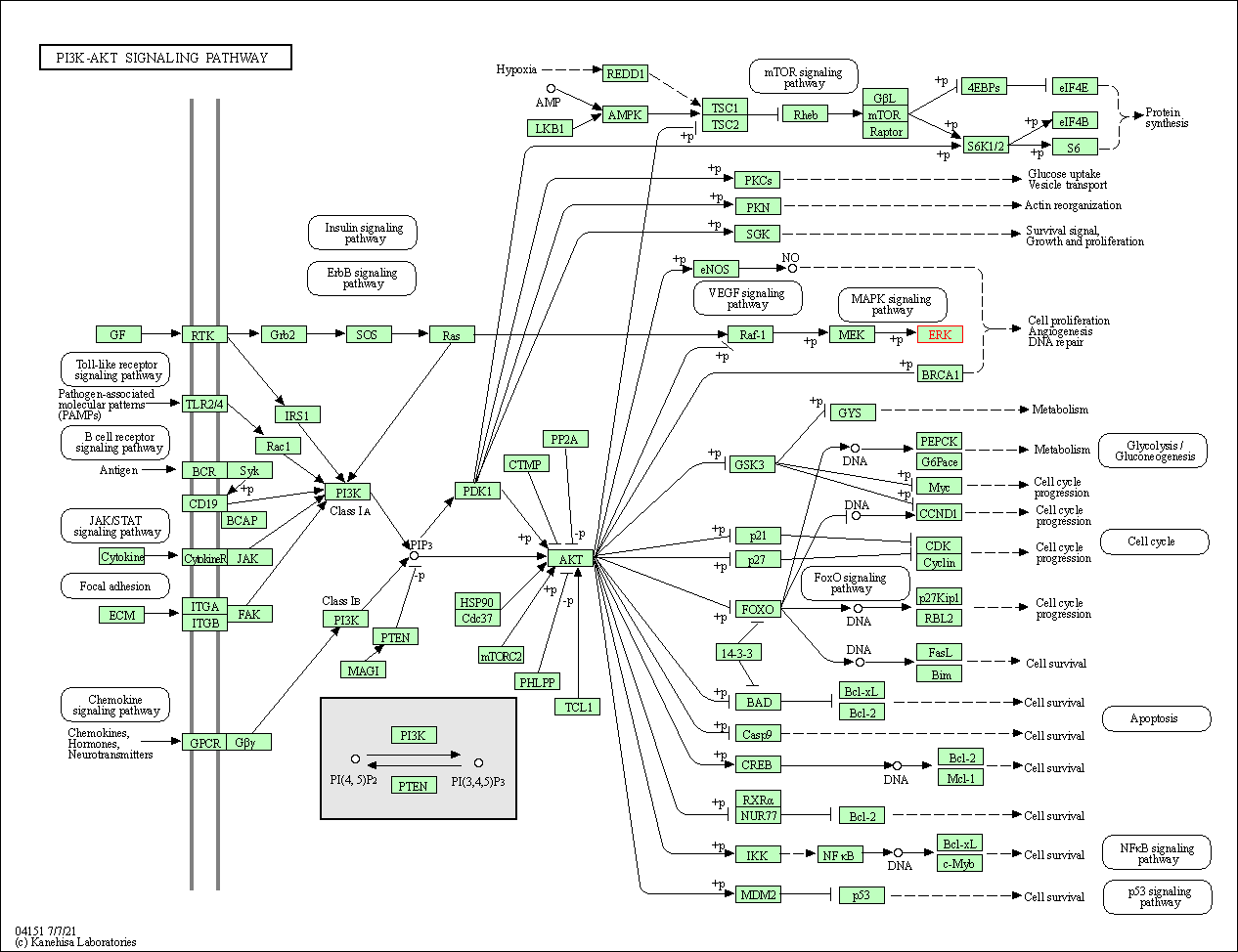
| Down-regulation | Phosphorylation | ERK1 | Molecule Info |
Pathway MAP
|
||
| Down-regulation | Phosphorylation | ERK2 | Molecule Info |
Pathway MAP
|
||
| Down-regulation | Phosphorylation | mTOR | Molecule Info |
Pathway MAP
|
||
| Down-regulation | Phosphorylation | S6K1 | Molecule Info |
Pathway MAP
|
||
| In-vitro Model | HL-60 | CVCL_0002 | Adult acute myeloid leukemia | Homo sapiens | ||
| ARAC-8C | CVCL_GZ09 | T acute lymphoblastic leukemia | Homo sapiens | |||
| Jurkat | CVCL_0065 | T acute lymphoblastic leukemia | Homo sapiens | |||
| MOLT-4 | CVCL_0013 | Adult T acute lymphoblastic leukemia | Homo sapiens | |||
| CA46 | CVCL_1101 | Burkitt lymphoma | Homo sapiens | |||
| In-vivo Model | Around 1.5*107 HL-60/H3 cells were subcutaneously injected into the right flank of BALB/C-nude mice. | |||||
| Experimental
Result(s) |
Emodin significantly enhanced chemosensitivity of AML cells to Ara-C, inhibited leukemic cell growth, and improved survival in the mouse xenograft model of AML. Dual targeting of Akt and ERK signaling pathways might contribute to the anti-leukemia effects on AML cells in vitro and in vivo. | |||||
| Ginsenoside compound K | Panax ginseng | Click to Show/Hide the Molecular Data of This NP | ||||
| Augmenting Drug Sensitivity | Click to Show/Hide | |||||
| Representative Experiment Reporting the Effect of This Combination | [5] | |||||
| Detail(s) |
Combination Info
click to show the detail info of this combination
|
|||||
| Biological
Regulation |
Up-regulation | Ratio of dCKappa to CDA | ||||
| In-vitro Model | HL-60 | CVCL_0002 | Adult acute myeloid leukemia | Homo sapiens | ||
| THP-1 | CVCL_0006 | Childhood acute monocytic leukemia | Homo sapiens | |||
| U-937 | CVCL_0007 | Adult acute monocytic leukemia | Homo sapiens | |||
| NCI-H358 | CVCL_1559 | Lung adenocarcinoma | Homo sapiens | |||
| MCF-7 | CVCL_0031 | Invasive breast carcinoma | Homo sapiens | |||
| Hep-G2 | CVCL_0027 | Hepatocellular carcinoma | Homo sapiens | |||
| C2C12 | CVCL_0188 | Healthy | Mus musculus | |||
| HAECT-1 | CVCL_VU17 | Healthy | Homo sapiens | |||
| RAW 264.7 | CVCL_0493 | Mouse leukemia | Mus musculus | |||
| MOLM-13 | CVCL_2119 | Adult acute myeloid leukemia | Homo sapiens | |||
| Experimental
Result(s) |
Ara-C combined with CK could achieve the efficacy of higher concentration of ara-C. CK promoted ara-C-induced cell membrane damage and mitochondrial dysfunction and increased ara-C-induced DNA damage. | |||||
| β. A List of Natural Product(s) Able to Reverse the Resistance of This Drug | ||||||
| Triptolide | Tripterygium hypoglaucum | Click to Show/Hide the Molecular Data of This NP | ||||
| Reversing Drug Resistance | Click to Show/Hide | |||||
| Representative Experiment Reporting the Effect of This Combination | [6] | |||||
| Detail(s) |
Combination Info
click to show the detail info of this combination
|
|||||
| Molecule(s)
Regulation |
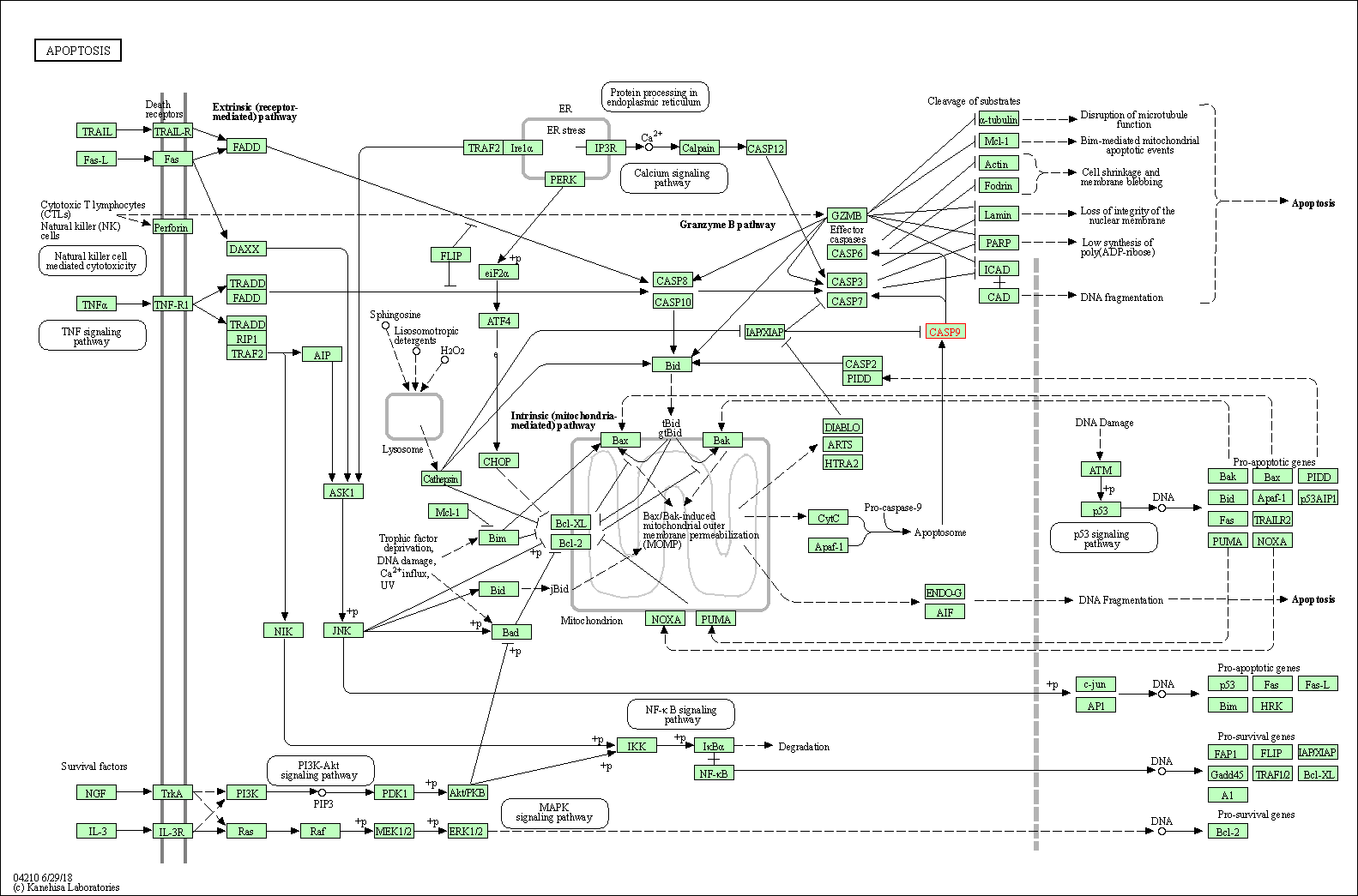
Up-regulation | Expression | CASP9 | Molecule Info |
Pathway MAP
|
|
| Down-regulation | Phosphorylation | CHK1 | Molecule Info |
Pathway MAP
|
||
| Up-regulation | Expression | H2AFX | Molecule Info |
Pathway MAP
|
||
| Down-regulation | Phosphorylation | RAD53 | Molecule Info |
Pathway MAP
|
||
| In-vitro Model | NALM-6 | CVCL_0092 | Adult B acute lymphoblastic leukemia | Homo sapiens | ||
| In-vivo Model | To generate a mouse model of araC-resistant ALL, NALM-6/R cells (5 * 105) were subcutaneously injected into the angular veins of sublethally irradiated adult NSI (NOD/SCID IL2rg-/-) mice (20-30 g body weight, 2-3 months of age). | |||||
| Experimental
Result(s) |
Low dose triptolide reverses chemoresistance in adult acute lymphoblastic leukemia cells via reactive oxygen species generation and DNA damage response disruption. | |||||
| Target and Pathway | ||||
|---|---|---|---|---|
| Target(s) | Herpes simplex virus DNA polymerase UL30 (HSV UL30) | Molecule Info | [7] | |