Natural Product (NP) Details
| General Information of the NP (ID: NP9073) | |||||
|---|---|---|---|---|---|
| Name |
Gingerol
|
||||
| Synonyms |
[6]-Gingerol; 6-Gingerol
Click to Show/Hide
|
||||
| Species Origin | Zingiber officinale ... | Click to Show/Hide | |||
| Zingiber officinale | |||||
| Zingiber officinale | |||||
| Disease | Renal cell carcinoma [ICD-11: 2C90] | Investigative | [1] | ||
| Structure |

|
Click to Download Mol2D MOL |
|||
| ADMET Property |
Absporption
Caco-2 Permeability
-5.104
MDCK Permeability
-4.837
PAMPA
- - -
HIA
- - -
Distribution
VDss
0.057
PPB
80%
BBB
- - -
Metabolism
CYP1A2 inhibitor
- - -
CYP1A2 substrate
- - -
CYP2C19 inhibitor
+++
CYP2C19 substrate
- - -
CYP2C9 inhibitor
-
CYP2C9 substrate
+++
CYP2D6 inhibitor
- -
CYP2D6 substrate
+++
CYP3A4 inhibitor
+++
CYP3A4 substrate
- - -
CYP2B6 inhibitor
+++
CYP2B6 substrate
- - -
CYP2C8 inhibitor
+++
HLM Stability
++
Excretion
CLplasma
7.929
T1/2
1.044
Toxicity
DILI
- - -
Rat Oral Acute Toxicity
-
FDAMDD
+
Respiratory
+++
Human Hepatotoxicity
+
Ototoxicity
-
Drug-induced Nephrotoxicity
++
Drug-induced Neurotoxicity
-
Hematotoxicity
- -
Genotoxicity
- - -
Tips: 1. For the classification endpoints, the prediction probability values are transformed into six symbols: 0-0.1 (- - -), 0.1-0.3 (- -), 0.3-0.5 (-), 0.5-0.7 (+), 0.7-0.9 (++), and 0.9-1.0 (+++).
2. Additionally, the corresponding relationships of the three labels are as follows: excellent; medium; poor.
Click to Show/Hide
|
||||
| Click to Show/Hide the Molecular Information and External Link(s) of This Natural Product | |||||
| Formula |
C17H26O4
|
||||
| PubChem CID | |||||
| Canonical SMILES |
CCCCCC(CC(=O)CCC1=CC(=C(C=C1)O)OC)O
|
||||
| InChI |
1S/C17H26O4/c1-3-4-5-6-14(18)12-15(19)9-7-13-8-10-16(20)17(11-13)21-2/h8,10-11,14,18,20H,3-7,9,12H2,1-2H3/t14-/m0/s1
|
||||
| InChIKey |
NLDDIKRKFXEWBK-AWEZNQCLSA-N
|
||||
| CAS Number |
CAS 23513-14-6
|
||||
| Herb ID | |||||
| ETMC ID | |||||
| SymMap ID | |||||
| TTD Drug ID | |||||
| Combinatorial Therapeutic Effect(s) Validated Clinically or Experimentally | ||||||
|---|---|---|---|---|---|---|
| α. A List of Drug(s) Whose Efficacy can be Enhanced by This NP | ||||||
| Cisplatin | Bladder cancer | Click to Show/Hide the Molecular Data of This Drug | ||||
| Achieving Therapeutic Synergy | Click to Show/Hide | |||||
| Representative Experiment Reporting the Effect of This Combination | [2] | |||||
| Detail(s) |
Combination Info
 click to show the detail info of this combination
|
|||||
| Molecule(s)
Regulation |
Down-regulation | Expression | AKT1 | Molecule Info |
Pathway MAP
|
|
| Down-regulation | Phosphorylation | AKT1 | Molecule Info |
Pathway MAP
|
||
| Down-regulation | Expression | CCNA2 | Molecule Info |
Pathway MAP
|
||
| Down-regulation | Expression | CCND1 | Molecule Info |
Pathway MAP
|
||
| Up-regulation | Expression | CDKN1A | Molecule Info |
Pathway MAP
|
||
| Up-regulation | Expression | IFI27 | Molecule Info |
Pathway MAP
|
||
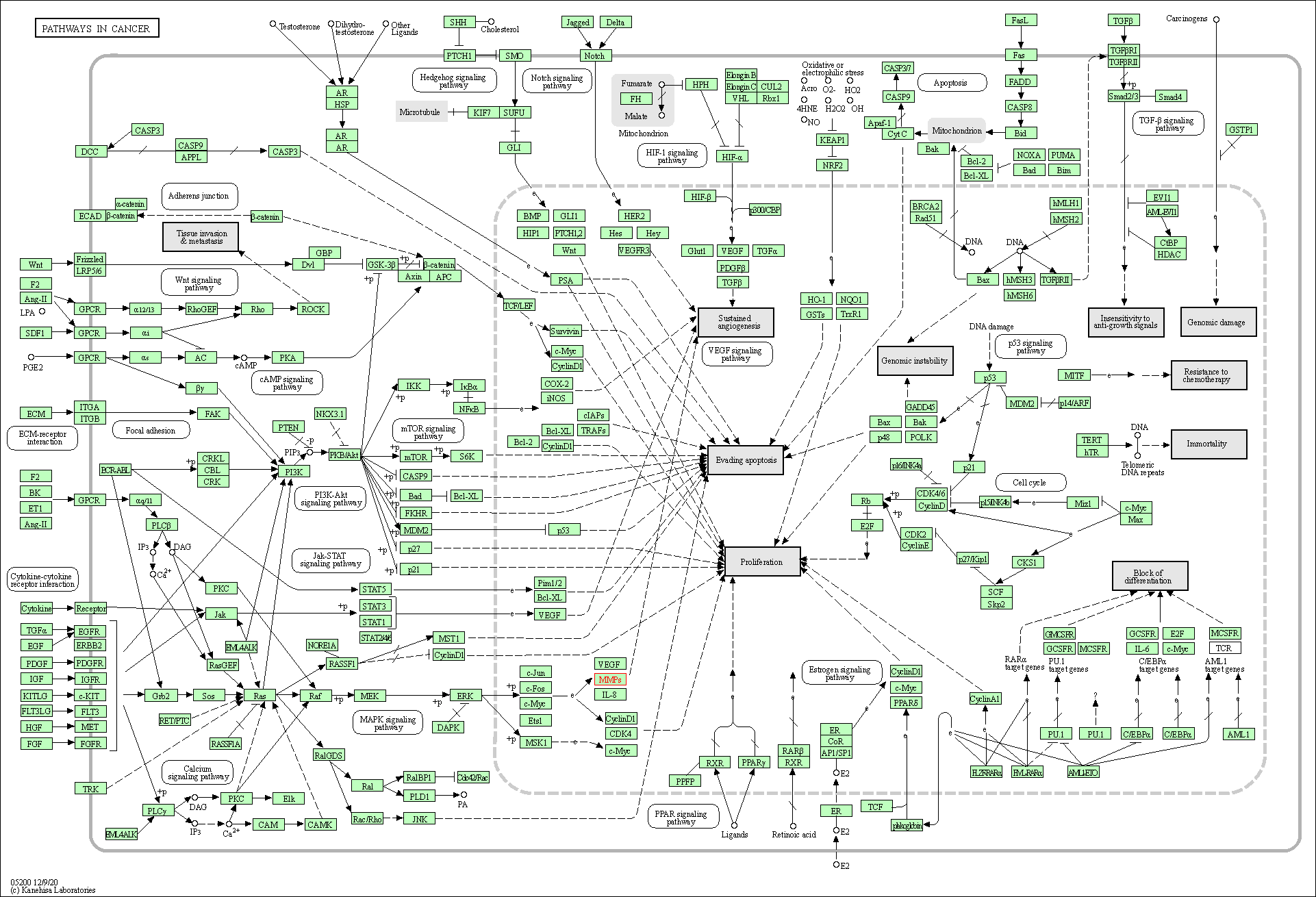
| Down-regulation | Expression | MMP-9 | Molecule Info |
Pathway MAP
|
||
| Down-regulation | Phosphorylation | PIK3CB | Molecule Info |
Pathway MAP
|
||
| In-vitro Model | HGC-27 | CVCL_1279 | Gastric carcinoma | Homo sapiens | ||
| MGC-803 | CVCL_5334 | Gastric mucinous adenocarcinoma | Homo sapiens | |||
| Experimental
Result(s) |
[6]-Gingerol enhances the cisplatin sensitivity of gastric cancer cells through inhibition of proliferation and invasion via PI3K/AKT signaling pathway. | |||||
| TNF-related apoptosis inducing ligand | Lung cancer | Click to Show/Hide the Molecular Data of This Drug | ||||
| Augmenting Drug Sensitivity | Click to Show/Hide | |||||
| Representative Experiment Reporting the Effect of This Combination | [3] | |||||
| Detail(s) |
Combination Info
click to show the detail info of this combination
|
|||||
| Molecule(s)
Regulation |
Up-regulation | Expression | MAP1LC3A | Molecule Info |
Pathway MAP
|
|
| Up-regulation | Expression | SQSTM1 | Molecule Info |
Pathway MAP
|
||
| In-vitro Model | A-549 | CVCL_0023 | Lung adenocarcinoma | Homo sapiens | ||
| Experimental
Result(s) |
Inhibition of the autophagy flux by gingerol enhances TRAIL-induced tumor cell death. | |||||
| β. A List of Drug(s) Whose Adverse Effect can be Decreased by This NP | ||||||
| Doxorubicin | Solid tumour/cancer | Click to Show/Hide the Molecular Data of This Drug | ||||
| Decreasing Adverse Drug Reaction | Click to Show/Hide | |||||
| Representative Experiment Reporting the Effect of This Combination | [4] | |||||
| Detail(s) |
Combination Info
click to show the detail info of this combination
|
|||||
| Molecule(s)
Regulation |
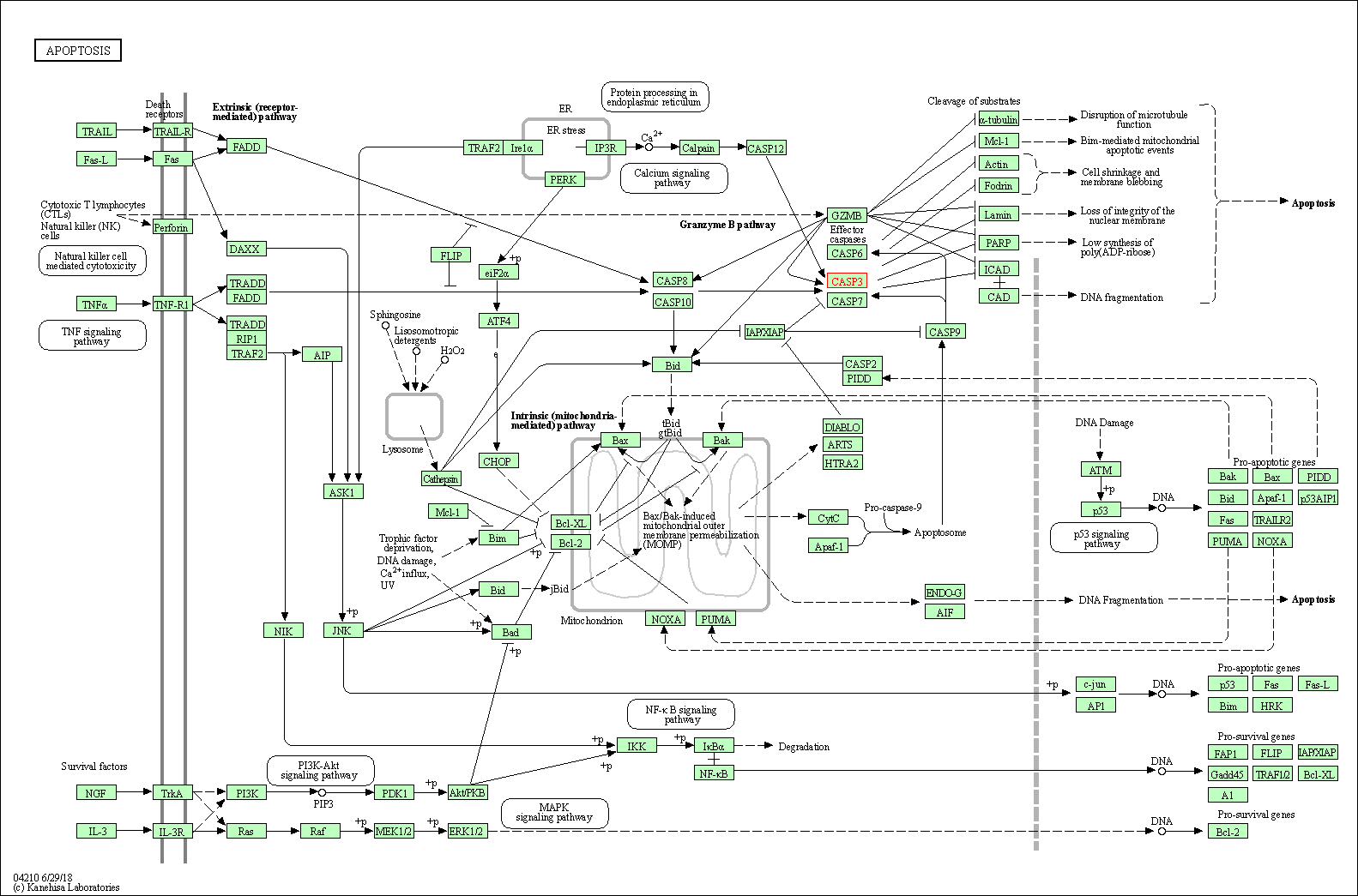
Up-regulation | Cleavage | CASP3 | Molecule Info |
Pathway MAP
|
|
| In-vitro Model | 4T1Br4 | Breast cancer | Rattus norvegicus | |||
| MDA-MB-231 HMTL.6 | Breast cancer | Homo sapiens | ||||
| In-vivo Model | For a xenograft model, 1*106 human MDA-MB-231 HMTL.6 cells were injected into the inguinal mammary fat pad of Balb/c congenic athymic nude mice. | |||||
| Experimental
Result(s) |
[10]-Gingerol improves doxorubicin anticancer activity and decreases its side effects in triple negative breast cancer models. | |||||
| Target and Pathway | ||||
|---|---|---|---|---|
| Target(s) | Transformation-sensitive p120 (TRPA1) | Molecule Info | [5] | |
| KEGG Pathway | Inflammatory mediator regulation of TRP channels | Click to Show/Hide | ||
| Reactome | TRP channels | Click to Show/Hide | ||