Natural Product (NP) Details
| General Information of the NP (ID: NP3528) | |||||
|---|---|---|---|---|---|
| Name |
Magnolol
|
||||
| Synonyms |
Magnolol; 528-43-8; 5,5'-Diallyl-[1,1'-biphenyl]-2,2'-diol; 5,5'-Diallyl-2,2'-biphenyldiol; 2,2'-Bichavicol; 5,5'-Diallyl-2,2'-dihydroxybiphenyl; NSC 293099; Dehydrodichavicol; UNII-001E35HGVF; 4-allyl-2-(5-allyl-2-hydroxy-phenyl)phenol; MFCD00016658; MLS001048917; 001E35HGVF; 2-(2-hydroxy-5-prop-2-enylphenyl)-4-prop-2-enylphenol; CHEBI:6643; 5,5'-di(prop-2-en-1-yl)biphenyl-2,2'-diol; 5,5'-Diallylbiphenyl-2,2'-diol; [1,1'-Biphenyl]-2,2'-diol, 5,5'-di-2-propenyl-; SMR000387108; (1,1'-Biphenyl)-2,2'-diol, 5,5'-di-2-propenyl-; 2'-Bichavicol; SR-01000758206; Kopnolia; HSDB 7686; Magnolol,(S); PubChem19035; UPCMLD-DP037; cid_72300; SCHEMBL132477; REGID_for_CID_72300; CHEMBL180920; ZINC1645; DTXSID0044076; UPCMLD-DP037:001; BDBM78304; HMS2269N09; HMS3651O18; AMY40661; BCP28276; HY-N0163; AC-931; BBL027818; CM0085; NSC293099; s2321; STK801955; AKOS005266409; ACN-035415; CCG-208588; CS-5021; DS-1284; MCULE-1351244567; NSC-293099; SMP2_000086; Magnolol, >=95% (HPLC), from plant; NCGC00161609-01; NCGC00161609-02; AK-72952; O906; SY016075; AB0016717; D3971; FT-0628104; N1359; SW219728-1; 5,5`-Diallyl-[1,1`-biphenyl]-2,2`-diol; A10551; C10651; J10186; S-2836; 528M438; 5,5'-Di-2-propenyl-[1,1'-biphenyl]-2,2'-diol; Q-100598; Q6732002; SR-01000758206-3; SR-01000758206-4; BRD-K26168087-001-01-4; Magnolol, European Pharmacopoeia (EP) Reference Standard; [1,1'-Biphenyl]-2,2'-diol, 5,5'-di-2-propen-1-yl-; 2-(2-oxidanyl-5-prop-2-enyl-phenyl)-4-prop-2-enyl-phenol; 5,5'-bis(prop-2-en-1-yl)-[1,1'-biphenyl]-2,2'-diol; 2-[2-hydroxy-5-(prop-2-en-1-yl)phenyl]-4-(prop-2-en-1-yl)phenol; 5,5 inverted exclamation mark -Diallyl-2,2 inverted exclamation mark -biphenyldiol
Click to Show/Hide
|
||||
| Species Origin | Magnolia officinalis ... | Click to Show/Hide | |||
| Magnolia officinalis | |||||
| Disease | Cancer cachexia [ICD-11: MG20] | Investigative | [1] | ||
| Structure |

|
Click to Download Mol2D MOL |
|||
| ADMET Property |
Absporption
Caco-2 Permeability
-4.611
MDCK Permeability
-4.672
PAMPA
- - -
HIA
- - -
Distribution
VDss
0.342
PPB
92.4%
BBB
- - -
Metabolism
CYP1A2 inhibitor
+++
CYP1A2 substrate
- - -
CYP2C19 inhibitor
+++
CYP2C19 substrate
-
CYP2C9 inhibitor
- - -
CYP2C9 substrate
+++
CYP2D6 inhibitor
- - -
CYP2D6 substrate
+++
CYP3A4 inhibitor
+++
CYP3A4 substrate
- - -
CYP2B6 inhibitor
+++
CYP2B6 substrate
- - -
CYP2C8 inhibitor
+++
HLM Stability
- - -
Excretion
CLplasma
13.041
T1/2
1.349
Toxicity
DILI
-
Rat Oral Acute Toxicity
+
FDAMDD
+
Respiratory
+++
Human Hepatotoxicity
-
Ototoxicity
- -
Drug-induced Nephrotoxicity
- -
Drug-induced Neurotoxicity
+
Hematotoxicity
- - -
Genotoxicity
-
Tips: 1. For the classification endpoints, the prediction probability values are transformed into six symbols: 0-0.1 (- - -), 0.1-0.3 (- -), 0.3-0.5 (-), 0.5-0.7 (+), 0.7-0.9 (++), and 0.9-1.0 (+++).
2. Additionally, the corresponding relationships of the three labels are as follows: excellent; medium; poor.
Click to Show/Hide
|
||||
| Click to Show/Hide the Molecular Information and External Link(s) of This Natural Product | |||||
| Formula |
C18H18O2
|
||||
| PubChem CID | |||||
| Canonical SMILES |
C=CCC1=CC(=C(C=C1)O)C2=C(C=CC(=C2)CC=C)O
|
||||
| InChI |
1S/C18H18O2/c1-3-5-13-7-9-17(19)15(11-13)16-12-14(6-4-2)8-10-18(16)20/h3-4,7-12,19-20H,1-2,5-6H2
|
||||
| InChIKey |
VVOAZFWZEDHOOU-UHFFFAOYSA-N
|
||||
| CAS Number |
CAS 528-43-8
|
||||
| ChEBI ID | |||||
| Herb ID | |||||
| SymMap ID | |||||
| TCMSP ID | |||||
| Combinatorial Therapeutic Effect(s) Validated Clinically or Experimentally | ||||||
|---|---|---|---|---|---|---|
| α. A List of Drug(s) Whose Efficacy can be Enhanced by This NP | ||||||
| TNF-related apoptosis inducing ligand | Lung cancer | Click to Show/Hide the Molecular Data of This Drug | ||||
| Achieving Therapeutic Synergy | Click to Show/Hide | |||||
| Representative Experiment Reporting the Effect of This Combination | [2] | |||||
| Detail(s) |
Combination Info
 click to show the detail info of this combination
|
|||||
| Molecule(s)
Regulation |
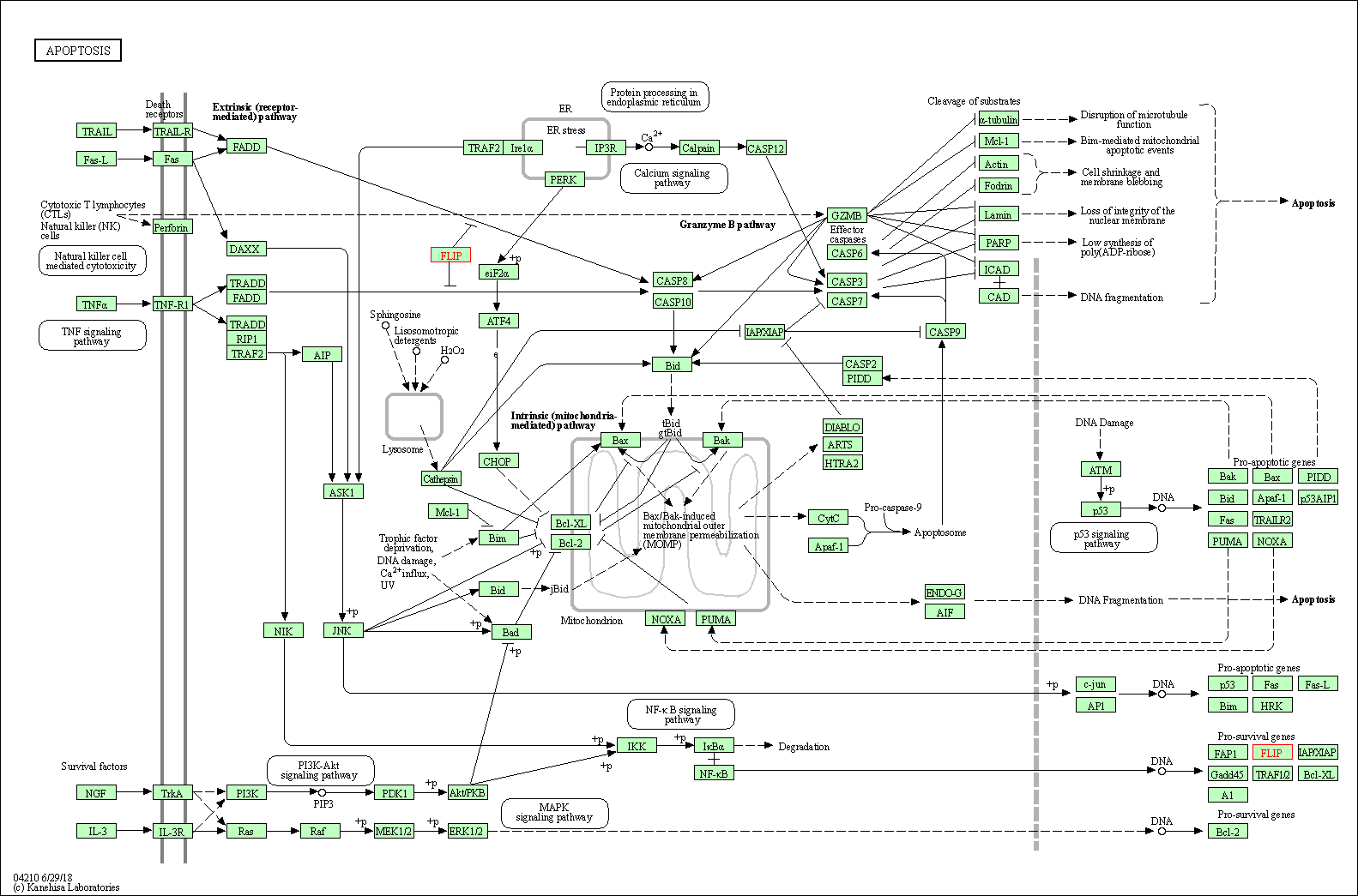
Down-regulation | Expression | CFLAR | Molecule Info |
Pathway MAP
|
|
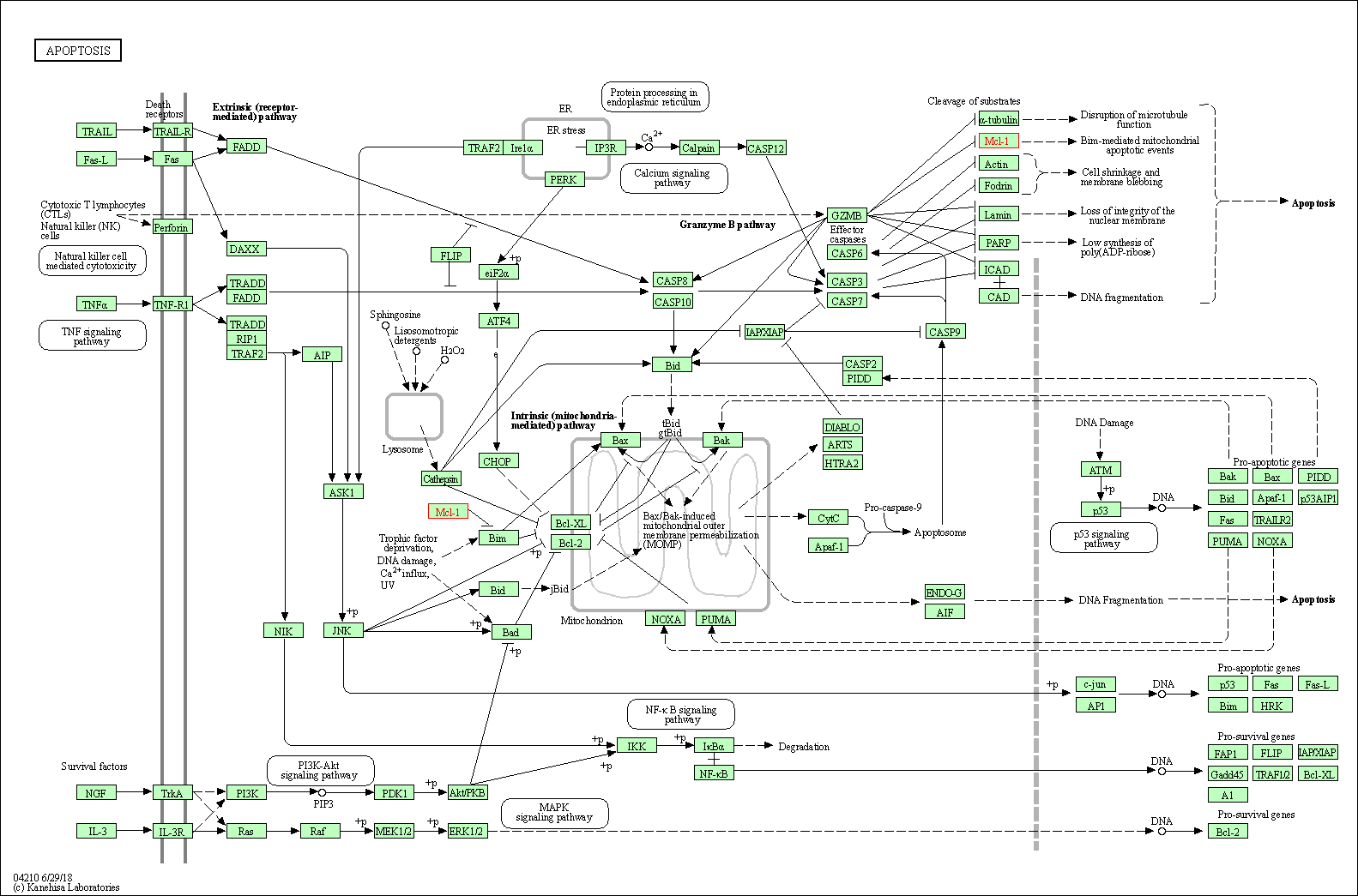
| Down-regulation | Expression | MCL1 | Molecule Info |
Pathway MAP
|
||
| Up-regulation | Expression | TRAIL-R2 | Molecule Info |
Pathway MAP
|
||
| In-vitro Model | Caki | Clear cell renal cell carcinoma | Homo sapiens | |||
| Experimental
Result(s) |
Magnolol enhanced TRAIL-induced apoptosis via ATF4-dependent DR5 upregulation and downregulation of c-FLIP and Mcl-1 proteins. | |||||
| Sorafenib | Renal cell carcinoma | Click to Show/Hide the Molecular Data of This Drug | ||||
| Achieving Therapeutic Synergy | Click to Show/Hide | |||||
| Representative Experiment Reporting the Effect of This Combination | [3] | |||||
| Detail(s) |
Combination Info
click to show the detail info of this combination
|
|||||
| Molecule(s)
Regulation |
Down-regulation | Phosphorylation | AKT1 | Molecule Info |
Pathway MAP
|
|
| In-vitro Model | SK-HEP-1 | CVCL_0525 | Hepatocellular carcinoma | Homo sapiens | ||
| Hep 3B2.1-7 | CVCL_0326 | Childhood hepatocellular carcinoma | Homo sapiens | |||
| Experimental
Result(s) |
AKT inhibition is associated with magnolol-enhanced the therapeutic effect of sorafenib in HCC. | |||||
| Azoles | Trypanosomiasis | Click to Show/Hide the Molecular Data of This Drug | ||||
| Achieving Therapeutic Synergy | Click to Show/Hide | |||||
| Representative Experiment Reporting the Effect of This Combination | [4] | |||||
| Detail(s) |
Combination Info
click to show the detail info of this combination
|
|||||
| In-vitro Model | Candida albicans | Microorganism model | Candida albicans | |||
| Experimental
Result(s) |
Magnolol synergizes with azoles for targeting of C. albicans by inducing a higher intracellular content of antifungals, by tapping into the competitive effect of ABC transporter Cdr1p substrates, and enhancing the effect by targeting of the ergosterol biosynthesis pathway. | |||||
| β. A List of Drug(s) Whose Adverse Effect can be Decreased by This NP | ||||||
| Oxaliplatin | Colorectal cancer | Click to Show/Hide the Molecular Data of This Drug | ||||
| Decreasing Adverse Drug Reaction | Click to Show/Hide | |||||
| Representative Experiment Reporting the Effect of This Combination | [5] | |||||
| Detail(s) |
Combination Info
click to show the detail info of this combination
|
|||||
| Molecule(s)
Regulation |
Down-regulation | Expression | p105 | Molecule Info |
Pathway MAP
|
|
| Experimental
Result(s) |
MG could prevent the development and progression of mucositis induced by oxaliplatin through multipathway. | |||||
| γ. A List of Drug(s) Whose Resistance can be Reversed by This NP | ||||||
| Cisplatin | Bladder cancer | Click to Show/Hide the Molecular Data of This Drug | ||||
| Reversing Drug Resistance | Click to Show/Hide | |||||
| Representative Experiment Reporting the Effect of This Combination | [6] | |||||
| Detail(s) |
Combination Info
click to show the detail info of this combination
|
|||||
| In-vitro Model | LL/2 (LLC1) | CVCL_4358 | Malignant tumors | Mus musculus | ||
| CT26 | CVCL_7254 | Mouse colon adenocarcinoma | Mus musculus | |||
| Experimental
Result(s) |
Magnolol attenuates cisplatin-induced muscle wasting by M2c macrophage activation. | |||||
| Target and Pathway | ||||
|---|---|---|---|---|
| Target(s) | Interleukin-1 beta (IL1B) | Molecule Info | [7] | |
| Matrix metalloproteinase-9 (MMP-9) | Molecule Info | [7] | ||
| Protein kinase B alpha (AKT1) | Molecule Info | [3] | ||
| Tumor necrosis factor (TNF) | Molecule Info | [7] | ||
| Tyrosine kinase receptor Erbb2 (HER2) | Molecule Info | [8] | ||
| KEGG Pathway | MAPK signaling pathway | Click to Show/Hide | ||
| 2 | ErbB signaling pathway | |||
| 3 | Ras signaling pathway | |||
| 4 | Rap1 signaling pathway | |||
| 5 | cGMP-PKG signaling pathway | |||
| 6 | cAMP signaling pathway | |||
| 7 | Chemokine signaling pathway | |||
| 8 | HIF-1 signaling pathway | |||
| 9 | FoxO signaling pathway | |||
| 10 | Sphingolipid signaling pathway | |||
| 11 | mTOR signaling pathway | |||
| 12 | PI3K-Akt signaling pathway | |||
| 13 | AMPK signaling pathway | |||
| 14 | Apoptosis | |||
| 15 | Adrenergic signaling in cardiomyocytes | |||
| 16 | VEGF signaling pathway | |||
| 17 | Osteoclast differentiation | |||
| 18 | Focal adhesion | |||
| 19 | Tight junction | |||
| 20 | Signaling pathways regulating pluripotency of stem cells | |||
| 21 | Platelet activation | |||
| 22 | Toll-like receptor signaling pathway | |||
| 23 | Jak-STAT signaling pathway | |||
| 24 | T cell receptor signaling pathway | |||
| 25 | B cell receptor signaling pathway | |||
| 26 | Fc epsilon RI signaling pathway | |||
| 27 | Fc gamma R-mediated phagocytosis | |||
| 28 | TNF signaling pathway | |||
| 29 | Neurotrophin signaling pathway | |||
| 30 | Cholinergic synapse | |||
| 31 | Dopaminergic synapse | |||
| 32 | Insulin signaling pathway | |||
| 33 | Progesterone-mediated oocyte maturation | |||
| 34 | Estrogen signaling pathway | |||
| 35 | Prolactin signaling pathway | |||
| 36 | Thyroid hormone signaling pathway | |||
| 37 | Adipocytokine signaling pathway | |||
| 38 | Glucagon signaling pathway | |||
| 39 | Regulation of lipolysis in adipocytes | |||
| 40 | Non-alcoholic fatty liver disease (NAFLD) | |||
| 41 | Carbohydrate digestion and absorption | |||
| 42 | Chagas disease (American trypanosomiasis) | |||
| 43 | Toxoplasmosis | |||
| 44 | Tuberculosis | |||
| 45 | Hepatitis C | |||
| 46 | Hepatitis B | |||
| 47 | Measles | |||
| 48 | Influenza A | |||
| 49 | HTLV-I infection | |||
| 50 | Epstein-Barr virus infection | |||
| 51 | Pathways in cancer | |||
| 52 | Proteoglycans in cancer | |||
| 53 | Colorectal cancer | |||
| 54 | Renal cell carcinoma | |||
| 55 | Pancreatic cancer | |||
| 56 | Endometrial cancer | |||
| 57 | Glioma | |||
| 58 | Prostate cancer | |||
| 59 | Melanoma | |||
| 60 | Chronic myeloid leukemia | |||
| 61 | Acute myeloid leukemia | |||
| 62 | Small cell lung cancer | |||
| 63 | Non-small cell lung cancer | |||
| 64 | Central carbon metabolism in cancer | |||
| 65 | Choline metabolism in cancer | |||
| 66 | Cytokine-cytokine receptor interaction | |||
| 67 | NF-kappa B signaling pathway | |||
| 68 | TGF-beta signaling pathway | |||
| 69 | Antigen processing and presentation | |||
| 70 | NOD-like receptor signaling pathway | |||
| 71 | RIG-I-like receptor signaling pathway | |||
| 72 | Hematopoietic cell lineage | |||
| 73 | Natural killer cell mediated cytotoxicity | |||
| 74 | Type II diabetes mellitus | |||
| 75 | Type I diabetes mellitus | |||
| 76 | Alzheimer's disease | |||
| 77 | Amyotrophic lateral sclerosis (ALS) | |||
| 78 | Pertussis | |||
| 79 | Legionellosis | |||
| 80 | Leishmaniasis | |||
| 81 | African trypanosomiasis | |||
| 82 | Malaria | |||
| 83 | Amoebiasis | |||
| 84 | Herpes simplex infection | |||
| 85 | Asthma | |||
| 86 | Inflammatory bowel disease (IBD) | |||
| 87 | Systemic lupus erythematosus | |||
| 88 | Rheumatoid arthritis | |||
| 89 | Allograft rejection | |||
| 90 | Graft-versus-host disease | |||
| 91 | Hypertrophic cardiomyopathy (HCM) | |||
| 92 | Dilated cardiomyopathy | |||
| 93 | Calcium signaling pathway | |||
| 94 | Adherens junction | |||
| 95 | MicroRNAs in cancer | |||
| 96 | Bladder cancer | |||
| 97 | Leukocyte transendothelial migration | |||
| 98 | Transcriptional misregulation in cancer | |||
| 99 | Cytosolic DNA-sensing pathway | |||
| 100 | Inflammatory mediator regulation of TRP channels | |||
| 101 | Prion diseases | |||
| 102 | Salmonella infection | |||
| NetPath Pathway | TSH Signaling Pathway | Click to Show/Hide | ||
| 2 | TCR Signaling Pathway | |||
| 3 | IL2 Signaling Pathway | |||
| 4 | IL3 Signaling Pathway | |||
| 5 | IL4 Signaling Pathway | |||
| 6 | Leptin Signaling Pathway | |||
| 7 | RANKL Signaling Pathway | |||
| 8 | IL1 Signaling Pathway | |||
| 9 | ID Signaling Pathway | |||
| 10 | TWEAK Signaling Pathway | |||
| 11 | TNFalpha Signaling Pathway | |||
| 12 | IL5 Signaling Pathway | |||
| 13 | TGF_beta_Receptor Signaling Pathway | |||
| 14 | Wnt Signaling Pathway | |||
| Panther Pathway | Angiogenesis | Click to Show/Hide | ||
| 2 | Apoptosis signaling pathway | |||
| 3 | EGF receptor signaling pathway | |||
| 4 | Endothelin signaling pathway | |||
| 5 | FGF signaling pathway | |||
| 6 | Huntington disease | |||
| 7 | Hypoxia response via HIF activation | |||
| 8 | Inflammation mediated by chemokine and cytokine signaling pathway | |||
| 9 | Insulin/IGF pathway-protein kinase B signaling cascade | |||
| 10 | Interleukin signaling pathway | |||
| 11 | PI3 kinase pathway | |||
| 12 | T cell activation | |||
| 13 | VEGF signaling pathway | |||
| 14 | p53 pathway | |||
| 15 | Ras Pathway | |||
| 16 | p53 pathway by glucose deprivation | |||
| 17 | p53 pathway feedback loops 2 | |||
| 18 | CCKR signaling map ST | |||
| 19 | Wnt signaling pathway | |||
| 20 | Cadherin signaling pathway | |||
| 21 | Alzheimer disease-presenilin pathway | |||
| 22 | Plasminogen activating cascade | |||
| Pathwhiz Pathway | Intracellular Signalling Through Adenosine Receptor A2a and Adenosine | Click to Show/Hide | ||
| 2 | Intracellular Signalling Through Adenosine Receptor A2b and Adenosine | |||
| 3 | Fc Epsilon Receptor I Signaling in Mast Cells | |||
| 4 | Insulin Signalling | |||
| 5 | Leucine Stimulation on Insulin Signaling | |||
| 6 | Phosphatidylinositol Phosphate Metabolism | |||
| Pathway Interaction Database | Regulation of nuclear SMAD2/3 signaling | Click to Show/Hide | ||
| 2 | Fc-epsilon receptor I signaling in mast cells | |||
| 3 | Endothelins | |||
| 4 | BCR signaling pathway | |||
| 5 | LPA receptor mediated events | |||
| 6 | Insulin Pathway | |||
| 7 | IL4-mediated signaling events | |||
| 8 | TCR signaling in naï | |||
| 9 | ||||
| 10 | Plasma membrane estrogen receptor signaling | |||
| 11 | CD40/CD40L signaling | |||
| 12 | Signaling events mediated by Hepatocyte Growth Factor Receptor (c-Met) | |||
| 13 | Signaling events mediated by PTP1B | |||
| 14 | S1P3 pathway | |||
| 15 | Coregulation of Androgen receptor activity | |||
| 16 | Reelin signaling pathway | |||
| 17 | Integrin-linked kinase signaling | |||
| 18 | TCR signaling in naï | |||
| 19 | ||||
| 20 | Angiopoietin receptor Tie2-mediated signaling | |||
| 21 | FAS (CD95) signaling pathway | |||
| 22 | Thromboxane A2 receptor signaling | |||
| 23 | Regulation of Telomerase | |||
| 24 | FOXA2 and FOXA3 transcription factor networks | |||
| 25 | Glucocorticoid receptor regulatory network | |||
| 26 | mTOR signaling pathway | |||
| 27 | CXCR4-mediated signaling events | |||
| 28 | IGF1 pathway | |||
| 29 | FoxO family signaling | |||
| 30 | IL2 signaling events mediated by PI3K | |||
| 31 | Ceramide signaling pathway | |||
| 32 | p75(NTR)-mediated signaling | |||
| 33 | E-cadherin signaling in the nascent adherens junction | |||
| 34 | amb2 Integrin signaling | |||
| 35 | Integrins in angiogenesis | |||
| 36 | IFN-gamma pathway | |||
| 37 | ErbB1 downstream signaling | |||
| 38 | ErbB2/ErbB3 signaling events | |||
| 39 | IL6-mediated signaling events | |||
| 40 | E-cadherin signaling in keratinocytes | |||
| 41 | Nephrin/Neph1 signaling in the kidney podocyte | |||
| 42 | Retinoic acid receptors-mediated signaling | |||
| 43 | IL8- and CXCR2-mediated signaling events | |||
| 44 | Signaling events mediated by the Hedgehog family | |||
| 45 | Nongenotropic Androgen signaling | |||
| 46 | Hedgehog signaling events mediated by Gli proteins | |||
| 47 | Caspase Cascade in Apoptosis | |||
| 48 | CXCR3-mediated signaling events | |||
| 49 | VEGFR1 specific signals | |||
| 50 | Signaling events mediated by Stem cell factor receptor (c-Kit) | |||
| 51 | Signaling events mediated by VEGFR1 and VEGFR2 | |||
| 52 | a6b1 and a6b4 Integrin signaling | |||
| 53 | Aurora A signaling | |||
| 54 | Insulin-mediated glucose transport | |||
| 55 | Class I PI3K signaling events mediated by Akt | |||
| 56 | IL8- and CXCR1-mediated signaling events | |||
| 57 | HIF-1-alpha transcription factor network | |||
| 58 | p53 pathway | |||
| 59 | Trk receptor signaling mediated by PI3K and PLC-gamma | |||
| 60 | VEGFR3 signaling in lymphatic endothelium | |||
| 61 | FGF signaling pathway | |||
| 62 | IL27-mediated signaling events | |||
| 63 | Canonical NF-kappaB pathway | |||
| 64 | Calcineurin-regulated NFAT-dependent transcription in lymphocytes | |||
| 65 | Signaling events mediated by HDAC Class I | |||
| 66 | TNF receptor signaling pathway | |||
| 67 | RXR and RAR heterodimerization with other nuclear receptor | |||
| 68 | IL23-mediated signaling events | |||
| 69 | HIV-1 Nef: Negative effector of Fas and TNF-alpha | |||
| 70 | Cellular roles of Anthrax toxin | |||
| 71 | Downstream signaling in naï | |||
| 72 | ErbB4 signaling events | |||
| 73 | ErbB receptor signaling network | |||
| 74 | Validated targets of C-MYC transcriptional repression | |||
| 75 | Osteopontin-mediated events | |||
| 76 | Validated transcriptional targets of AP1 family members Fra1 and Fra2 | |||
| 77 | Validated targets of C-MYC transcriptional activation | |||
| 78 | Syndecan-4-mediated signaling events | |||
| 79 | AP-1 transcription factor network | |||
| 80 | Urokinase-type plasminogen activator (uPA) and uPAR-mediated signaling | |||
| 81 | Syndecan-1-mediated signaling events | |||
| 82 | Regulation of nuclear beta catenin signaling and target gene transcription | |||
| 83 | IL12-mediated signaling events | |||
| 84 | IL1-mediated signaling events | |||
| Reactome | Activation of BAD and translocation to mitochondria | Click to Show/Hide | ||
| 2 | GPVI-mediated activation cascade | |||
| 3 | PIP3 activates AKT signaling | |||
| 4 | Translocation of GLUT4 to the plasma membrane | |||
| 5 | Tetrahydrobiopterin (BH4) synthesis, recycling, salvage and regulation | |||
| 6 | AKT phosphorylates targets in the cytosol | |||
| 7 | AKT phosphorylates targets in the nucleus | |||
| 8 | Negative regulation of the PI3K/AKT network | |||
| 9 | eNOS activation | |||
| 10 | AKT-mediated inactivation of FOXO1A | |||
| 11 | Integrin alphaIIb beta3 signaling | |||
| 12 | Deactivation of the beta-catenin transactivating complex | |||
| 13 | CD28 dependent PI3K/Akt signaling | |||
| 14 | CTLA4 inhibitory signaling | |||
| 15 | G beta:gamma signalling through PI3Kgamma | |||
| 16 | KSRP (KHSRP) binds and destabilizes mRNA | |||
| 17 | VEGFR2 mediated vascular permeability | |||
| 18 | TP53 Regulates Metabolic Genes | |||
| 19 | Constitutive Signaling by AKT1 E17K in Cancer | |||
| 20 | Transcriptional regulation of white adipocyte differentiation | |||
| 21 | TNFR1-induced proapoptotic signaling | |||
| 22 | Regulation of TNFR1 signaling | |||
| 23 | TNFR1-induced NFkappaB signaling pathway | |||
| 24 | TNFR1-mediated ceramide production | |||
| 25 | TNFR2 non-canonical NF-kB pathway | |||
| 26 | TNF signaling | |||
| 27 | SHC1 events in ERBB2 signaling | |||
| 28 | PLCG1 events in ERBB2 signaling | |||
| 29 | GRB2 events in ERBB2 signaling | |||
| 30 | PI3K events in ERBB2 signaling | |||
| 31 | Constitutive Signaling by Aberrant PI3K in Cancer | |||
| 32 | Sema4D induced cell migration and growth-cone collapse | |||
| 33 | RAF/MAP kinase cascade | |||
| 34 | Collagen degradation | |||
| 35 | Degradation of the extracellular matrix | |||
| 36 | Activation of Matrix Metalloproteinases | |||
| 37 | Assembly of collagen fibrils and other multimeric structures | |||
| 38 | EPH-ephrin mediated repulsion of cells | |||
| 39 | Interleukin-1 signaling | |||
| 40 | Interleukin-1 processing | |||
| 41 | CLEC7A/inflammasome pathway | |||
| WikiPathways | Toll-like receptor signaling pathway | Click to Show/Hide | ||
| 2 | DNA Damage Response (only ATM dependent) | |||
| 3 | TCR Signaling Pathway | |||
| 4 | Notch Signaling Pathway | |||
| 5 | EPO Receptor Signaling | |||
| 6 | IL-2 Signaling Pathway | |||
| 7 | Insulin Signaling | |||
| 8 | Endochondral Ossification | |||
| 9 | EGF/EGFR Signaling Pathway | |||
| 10 | IL-4 Signaling Pathway | |||
| 11 | TGF beta Signaling Pathway | |||
| 12 | IL-6 signaling pathway | |||
| 13 | Wnt Signaling Pathway Netpath | |||
| 14 | Copper homeostasis | |||
| 15 | Extracellular vesicle-mediated signaling in recipient cells | |||
| 16 | Apoptosis-related network due to altered Notch3 in ovarian cancer | |||
| 17 | IL-3 Signaling Pathway | |||
| 18 | Cardiac Hypertrophic Response | |||
| 19 | Translocation of GLUT4 to the Plasma Membrane | |||
| 20 | Regulation of mRNA Stability by Proteins that Bind AU-rich Elements | |||
| 21 | PIP3 activates AKT signaling | |||
| 22 | Signal Transduction of S1P Receptor | |||
| 23 | T-Cell Receptor and Co-stimulatory Signaling | |||
| 24 | Primary Focal Segmental Glomerulosclerosis FSGS | |||
| 25 | Apoptosis | |||
| 26 | Alpha 6 Beta 4 signaling pathway | |||
| 27 | BDNF signaling pathway | |||
| 28 | Integrated Pancreatic Cancer Pathway | |||
| 29 | Oncostatin M Signaling Pathway | |||
| 30 | Corticotropin-releasing hormone | |||
| 31 | Interleukin-11 Signaling Pathway | |||
| 32 | AGE/RAGE pathway | |||
| 33 | TNF alpha Signaling Pathway | |||
| 34 | B Cell Receptor Signaling Pathway | |||
| 35 | Prostate Cancer | |||
| 36 | Signaling Pathways in Glioblastoma | |||
| 37 | TSLP Signaling Pathway | |||
| 38 | IL17 signaling pathway | |||
| 39 | IL-7 Signaling Pathway | |||
| 40 | Regulation of Microtubule Cytoskeleton | |||
| 41 | TWEAK Signaling Pathway | |||
| 42 | FSH signaling pathway | |||
| 43 | Leptin signaling pathway | |||
| 44 | TSH signaling pathway | |||
| 45 | RANKL/RANK Signaling Pathway | |||
| 46 | Integrated Breast Cancer Pathway | |||
| 47 | SREBP signalling | |||
| 48 | Integrated Cancer pathway | |||
| 49 | IL-1 signaling pathway | |||
| 50 | Metabolism of nitric oxide | |||
| 51 | Integrin-mediated Cell Adhesion | |||
| 52 | TFs Regulate miRNAs related to cardiac hypertrophy | |||
| 53 | MicroRNAs in cardiomyocyte hypertrophy | |||
| 54 | Angiogenesis | |||
| 55 | TOR Signaling | |||
| 56 | Regulation of toll-like receptor signaling pathway | |||
| 57 | AMPK Signaling | |||
| 58 | Androgen receptor signaling pathway | |||
| 59 | IL-5 Signaling Pathway | |||
| 60 | Monoamine Transport | |||
| 61 | SIDS Susceptibility Pathways | |||
| 62 | TGF Beta Signaling Pathway | |||
| 63 | Cytokines and Inflammatory Response | |||
| 64 | MAPK Signaling Pathway | |||
| 65 | EV release from cardiac cells and their functional effects | |||
| 66 | FAS pathway and Stress induction of HSP regulation | |||
| 67 | Transcriptional Regulation of White Adipocyte Differentiation | |||
| 68 | Aryl Hydrocarbon Receptor | |||
| 69 | Nanoparticle triggered regulated necrosis | |||
| 70 | Amyotrophic lateral sclerosis (ALS) | |||
| 71 | Adipogenesis | |||
| 72 | Allograft Rejection | |||
| 73 | Extrinsic Pathway for Apoptosis | |||
| 74 | Folate Metabolism | |||
| 75 | Vitamin B12 Metabolism | |||
| 76 | Selenium Micronutrient Network | |||
| 77 | Matrix Metalloproteinases | |||
| 78 | ErbB Signaling Pathway | |||
| 79 | Focal Adhesion | |||
| 80 | Bladder Cancer | |||
| 81 | Signaling by ERBB2 | |||
| 82 | miR-targeted genes in muscle cell - TarBase | |||
| 83 | Semaphorin interactions | |||
| 84 | IL1 and megakaryotyces in obesity | |||
| 85 | Mammary gland development pathway - Involution (Stage 4 of 4) | |||
| 86 | Activation of Matrix Metalloproteinases | |||
| 87 | Degradation of collagen | |||
| 88 | Spinal Cord Injury | |||
| 89 | Osteopontin Signaling | |||
| 90 | Type II interferon signaling (IFNG) | |||
| 91 | Senescence and Autophagy in Cancer | |||
| 92 | Myometrial Relaxation and Contraction Pathways | |||
| 93 | Aryl Hydrocarbon Receptor Pathway | |||
| 94 | Hematopoietic Stem Cell Differentiation | |||
| 95 | Alzheimers Disease | |||
| 96 | Interleukin-1 signaling | |||
| 97 | Serotonin Transporter Activity | |||
| 98 | NOD pathway | |||