Natural Product (NP) Details
| General Information of the NP (ID: NP3545) | |||||
|---|---|---|---|---|---|
| Name |
Schisandrol B
|
||||
| Synonyms |
Schisandrol B; Gomisin A; 58546-54-6; Schizandrol B; (+)-Gomisin A; Wuweizi alcohol B; Wuweizichun B; Gomisin-A;TJN-101;Wuweizi alcohol-B; Schisantherinol B; NCGC00183134-01; SCHEMBL2109595; TJN 101; MFCD01941645; 3,4,5,19-tetramethoxy-9,10-dimethyl-15,17-dioxatetracyclo[10.7.0.02,7.014,18]nonadeca-1(19),2,4,6,12,14(18)-hexaen-9-ol; LS-15009; AB0109732; W1799; 546S546; Q-100673; (+)-(6S,7S, Biar-R)-5,6,7,8-tetrahydro-1,2,3,13-tetramethoxy-6,7-dimethyl benzo[3,4]cycloocta[1,2-f][1,3]benzodioxol-6-ol; (6S,7S,13aR)- 5,6,7,8-Tetrahydro-1,2,3,13-tetramethoxy-6,7-dimethyl-benzo[3,4]cycloocta[1,2-f][1,3]benzodioxol-6-ol; 1,2,3,13-tetramethoxy-6,7-dimethyl-5,6,7,8-tetrahydrobenzo[3',4']cycloocta[1',2':4,5]benzo[1,2-d][1,3]dioxol-6-ol; 1,2,3,13-Tetramethoxy-6,7-dimethyl-5,6,7,8-tetrahydrobenzo[3,4]cycloocta[1,2-f][1,3]benzodioxol-6-ol, (6S,7S,13aR)-; Benzo[3,4]cycloocta[1,2-f][1,3]benzodioxol-6-ol, 5,6,7,8-tetrahydro-1,2,3,13-tetramethoxy-6,7-dimethyl-, (6S,7S,13aR)-
Click to Show/Hide
|
||||
| Species Origin | Schisandra chinensis ... | Click to Show/Hide | |||
| Schisandra chinensis | |||||
| Disease | Cholestatic liver disease [ICD-11: EC90] | Investigative | [1] | ||
| Structure |

|
Click to Download Mol2D MOL |
|||
| ADMET Property |
Absporption
Caco-2 Permeability
-4.726
MDCK Permeability
-4.667
PAMPA
- -
HIA
- - -
Distribution
VDss
0.145
PPB
90.7%
BBB
+
Metabolism
CYP1A2 inhibitor
+
CYP1A2 substrate
+++
CYP2C19 inhibitor
- - -
CYP2C19 substrate
+++
CYP2C9 inhibitor
- - -
CYP2C9 substrate
++
CYP2D6 inhibitor
- -
CYP2D6 substrate
+++
CYP3A4 inhibitor
++
CYP3A4 substrate
+++
CYP2B6 inhibitor
++
CYP2B6 substrate
- - -
CYP2C8 inhibitor
- - -
HLM Stability
- - -
Excretion
CLplasma
4.543
T1/2
1.274
Toxicity
DILI
+
Rat Oral Acute Toxicity
-
FDAMDD
++
Respiratory
+
Human Hepatotoxicity
+
Ototoxicity
+
Drug-induced Nephrotoxicity
+
Drug-induced Neurotoxicity
+
Hematotoxicity
+
Genotoxicity
- -
Tips: 1. For the classification endpoints, the prediction probability values are transformed into six symbols: 0-0.1 (- - -), 0.1-0.3 (- -), 0.3-0.5 (-), 0.5-0.7 (+), 0.7-0.9 (++), and 0.9-1.0 (+++).
2. Additionally, the corresponding relationships of the three labels are as follows: excellent; medium; poor.
Click to Show/Hide
|
||||
| Click to Show/Hide the Molecular Information and External Link(s) of This Natural Product | |||||
| Formula |
C23H28O7
|
||||
| PubChem CID | |||||
| Canonical SMILES |
CC1CC2=CC3=C(C(=C2C4=C(C(=C(C=C4CC1(C)O)OC)OC)OC)OC)OCO3
|
||||
| InChI |
1S/C23H28O7/c1-12-7-13-8-16-20(30-11-29-16)22(28-6)17(13)18-14(10-23(12,2)24)9-15(25-3)19(26-4)21(18)27-5/h8-9,12,24H,7,10-11H2,1-6H3
|
||||
| InChIKey |
ZWRRJEICIPUPHZ-UHFFFAOYSA-N
|
||||
| CAS Number |
CAS 58546-54-6
|
||||
| Herb ID | |||||
| Combinatorial Therapeutic Effect(s) Validated Clinically or Experimentally | ||||||
|---|---|---|---|---|---|---|
| α. A List of Drug(s) Whose Efficacy can be Enhanced by This NP | ||||||
| Apatinib | Breast cancer | Click to Show/Hide the Molecular Data of This Drug | ||||
| Achieving Therapeutic Synergy | Click to Show/Hide | |||||
| Representative Experiment Reporting the Effect of This Combination | [2] | |||||
| Detail(s) |
Combination Info
 click to show the detail info of this combination
|
|||||
| Molecule(s)
Regulation |
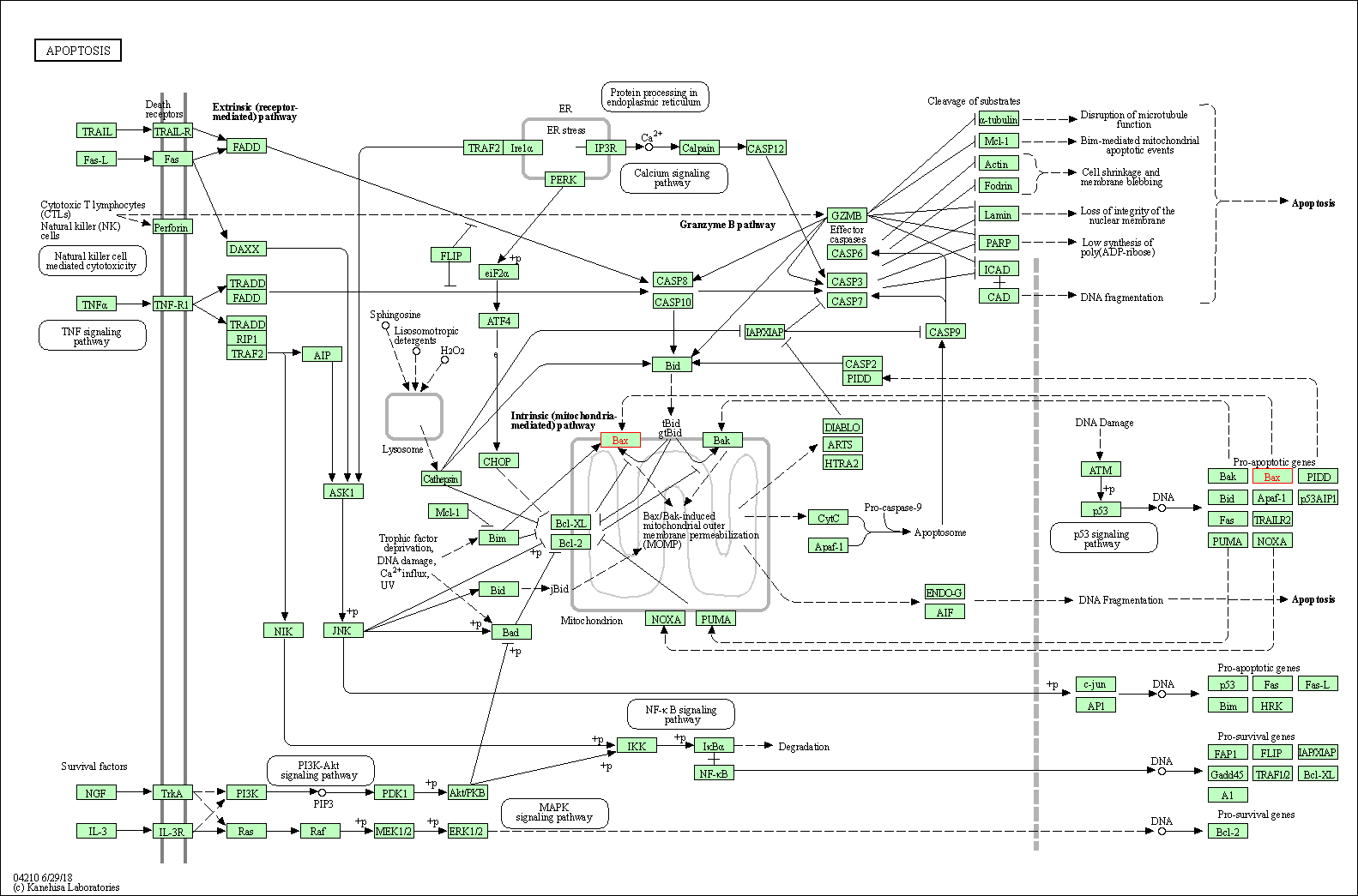
Up-regulation | Expression | BAX | Molecule Info |
Pathway MAP
|
|
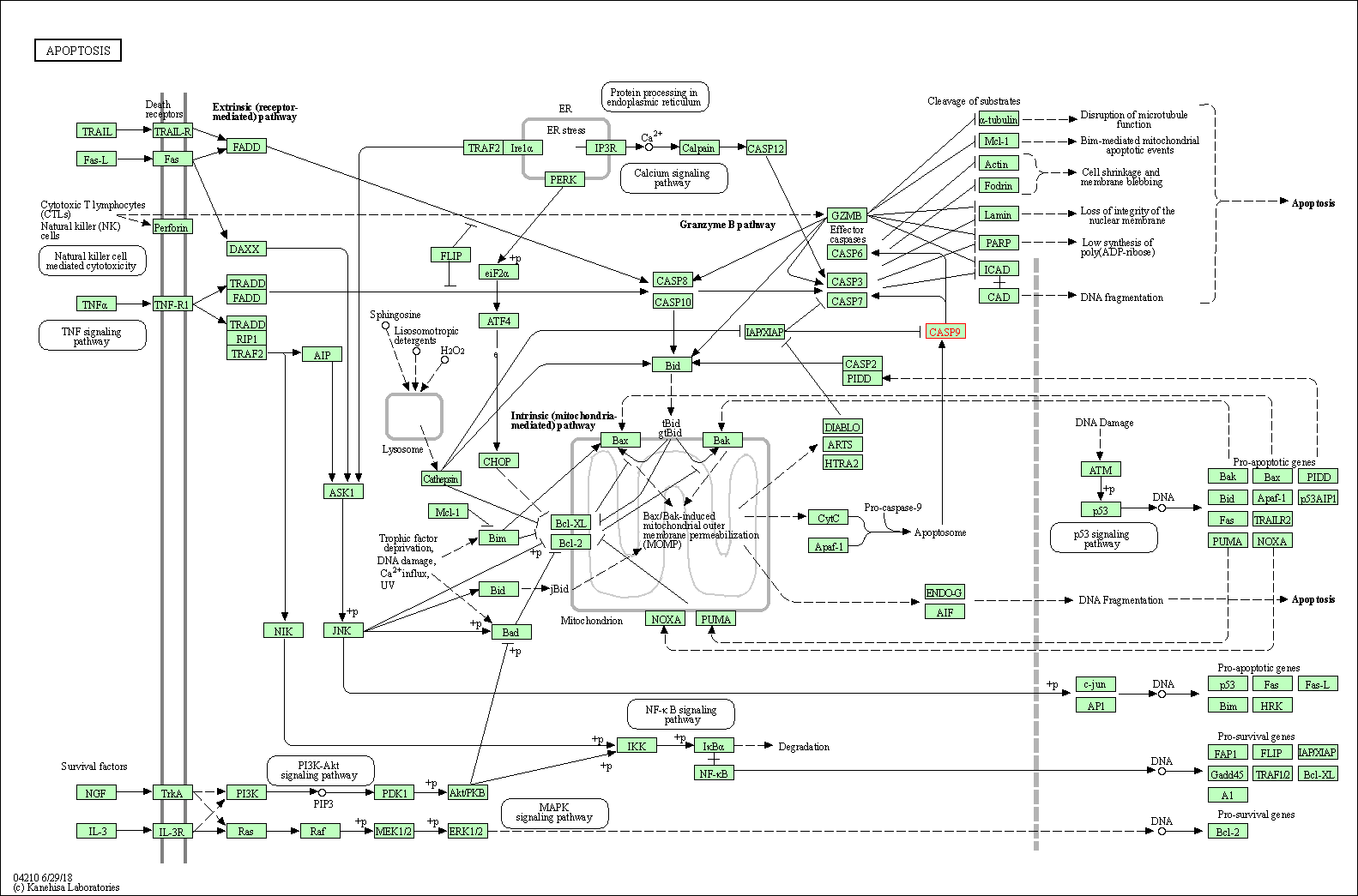
| Up-regulation | Cleavage | CASP9 | Molecule Info |
Pathway MAP
|
||
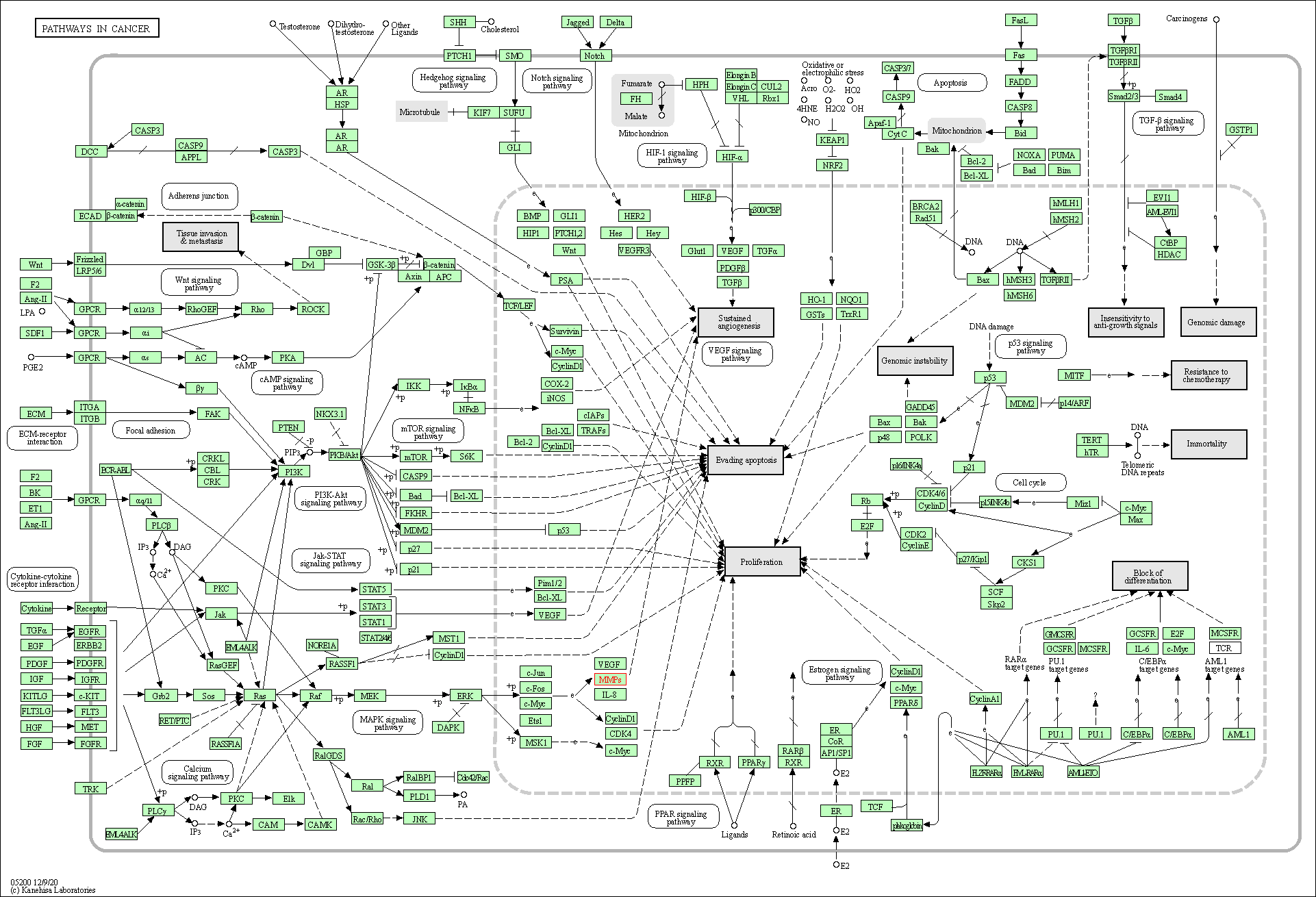
| Down-regulation | Expression | MMP-9 | Molecule Info |
Pathway MAP
|
||
| In-vitro Model | SGC-7901 | CVCL_0520 | Human gastric cancer | Homo sapiens | ||
| Experimental
Result(s) |
Low-toxicity Sch.B combined with low dosage apatinib has a more potent anti-cancer effect that apatinib alone. | |||||
| Docetaxel | Solid tumour/cancer | Click to Show/Hide the Molecular Data of This Drug | ||||
| Achieving Therapeutic Synergy | Click to Show/Hide | |||||
| Representative Experiment Reporting the Effect of This Combination | [3] | |||||
| Detail(s) |
Combination Info
click to show the detail info of this combination
|
|||||
| Molecule(s)
Regulation |
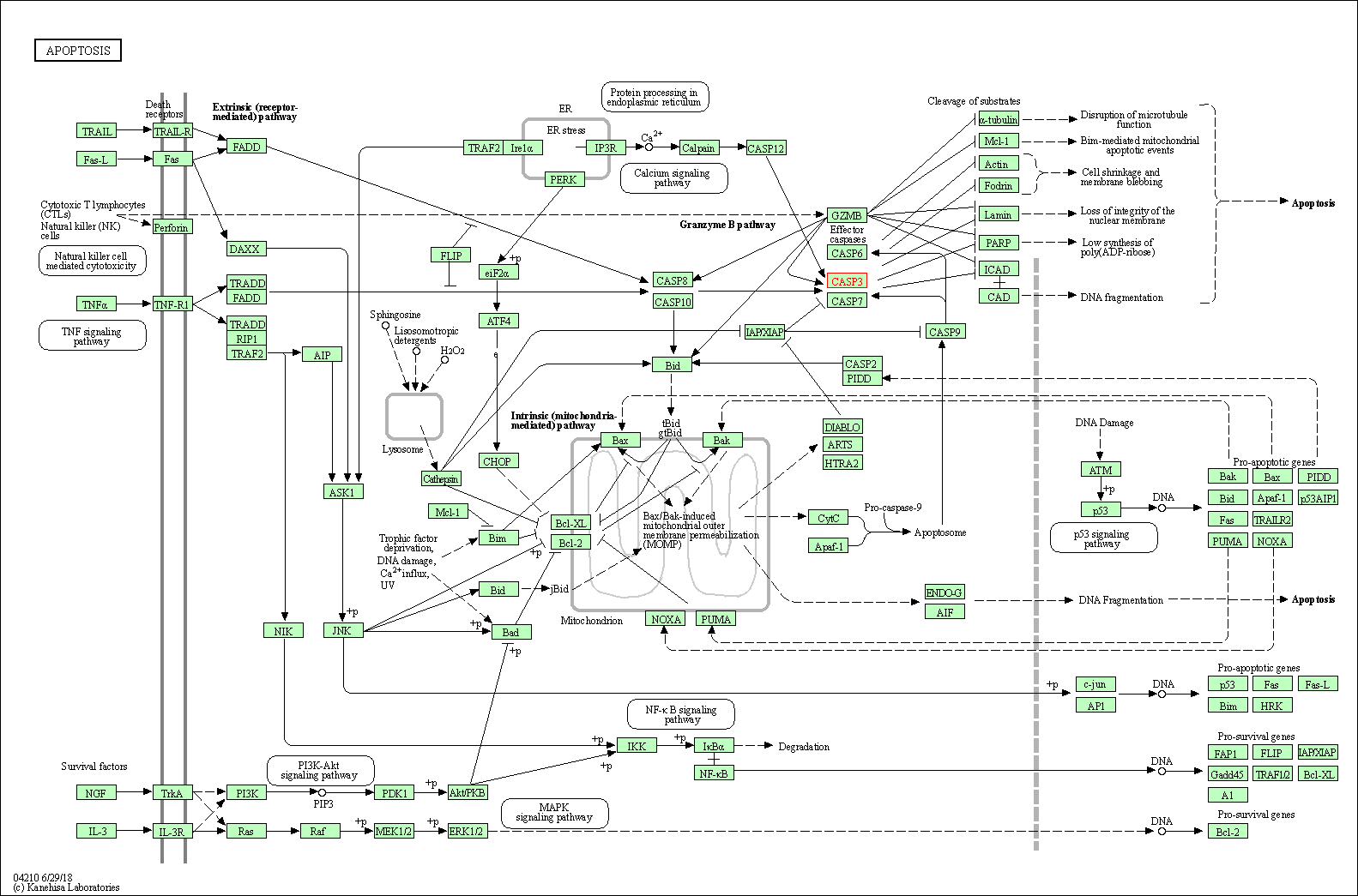
Up-regulation | Cleavage | CASP3 | Molecule Info |
Pathway MAP
|
|
| Down-regulation | Expression | CDH2 | Molecule Info |
Pathway MAP
|
||
| In-vitro Model | Ca Ski | CVCL_1100 | Cervical squamous cell carcinoma | Homo sapiens | ||
| In-vivo Model | Mice were subcutaneously implanted with cell suspension holding 1*106 Caski cells in the right flank. | |||||
| Experimental
Result(s) |
Sch B enhanced the anti-tumor effects of DTX in vitro and in vivo via growth, invasion, and apoptosis regulating. | |||||
| Cisplatin | Bladder cancer | Click to Show/Hide the Molecular Data of This Drug | ||||
| Achieving Therapeutic Synergy | Click to Show/Hide | |||||
| Representative Experiment Reporting the Effect of This Combination | [4] | |||||
| Detail(s) |
Combination Info
click to show the detail info of this combination
|
|||||
| In-vivo Model | The experiments were carried out on male Balb/c mice (8 - 10 weeks old). | |||||
| Experimental
Result(s) |
Schisandrin B, attenuates cisplatin-induced oxidative stress, genotoxicity and neurotoxicity through modulating NF-KappaB pathway in mice. | |||||
| Dexrazoxane | Breast cancer | Click to Show/Hide the Molecular Data of This Drug | ||||
| Achieving Therapeutic Synergy | Click to Show/Hide | |||||
| Representative Experiment Reporting the Effect of This Combination | [5] | |||||
| Detail(s) |
Combination Info
click to show the detail info of this combination
|
|||||
| In-vivo Model | A total of 150 healthy New Zealand white rabbits, weight 1.98 + 0.15 kg, male and female in equal numbers were used in this study. | |||||
| Experimental
Result(s) |
Schisandrin B had dose-dependent effects in decreasing the magnitude of doxorubicin-induced indicators of cardiomyopathy to a degree that approximated the decrease produced by dexrazoxane treatment. | |||||
| Albendazole | Parasitic worm infestation | Click to Show/Hide the Molecular Data of This Drug | ||||
| Achieving Therapeutic Synergy | Click to Show/Hide | |||||
| Representative Experiment Reporting the Effect of This Combination | [6] | |||||
| Detail(s) |
Combination Info
click to show the detail info of this combination
|
|||||
| In-vivo Model | Third-stage larvae (L3) were used to infect Sprague-Dawley (SD) rats. | |||||
| Experimental
Result(s) |
Albendazole-schisandrin B co-treatment significantly inhibited inflammasome activation, pyroptosis, and apoptosis. | |||||
| β. A List of Drug(s) Whose Adverse Effect can be Decreased by This NP | ||||||
| Cyclosporin | Psoriasis vulgaris | Click to Show/Hide the Molecular Data of This Drug | ||||
| Decreasing Adverse Drug Reaction | Click to Show/Hide | |||||
| Representative Experiment Reporting the Effect of This Combination | [7] | |||||
| Detail(s) |
Combination Info
click to show the detail info of this combination
|
|||||
| Molecule(s)
Regulation |
Down-regulation | Expression | LDHA | Molecule Info |
Pathway MAP
|
|
| Biological
Regulation |
Increase | ATP generation | ||||
| Induction | ROS generation | |||||
| In-vitro Model | HK2 | CVCL_0302 | Healthy | Homo sapiens | ||
| Experimental
Result(s) |
Sch B appears to protect against CsA-induced nephrotoxicity by decreasing oxidative stress and cell death. | |||||
| Doxorubicin | Solid tumour/cancer | Click to Show/Hide the Molecular Data of This Drug | ||||
| Decreasing Adverse Drug Reaction | Click to Show/Hide | |||||
| Representative Experiment Reporting the Effect of This Combination | [8] | |||||
| Detail(s) |
Combination Info
click to show the detail info of this combination
|
|||||
| Molecule(s)
Regulation |
Down-regulation | Expression | ABCB1 | Molecule Info |
Pathway MAP
|
|
| Down-regulation | Expression | MSH3 | Molecule Info |
Pathway MAP
|
||
| In-vivo Model | Male ICR mice (18-22 g) and male Sprague-Dawley rats (300-350 g) were used in this study. | |||||
| Experimental
Result(s) |
Schisandrin B prevents doxorubicin-induced cardiotoxicity via enhancing glutathione redox cycling. | |||||
| Tacrine | Alzheimer disease | Click to Show/Hide the Molecular Data of This Drug | ||||
| Decreasing Adverse Drug Reaction | Click to Show/Hide | |||||
| Representative Experiment Reporting the Effect of This Combination | [9] | |||||
| Detail(s) |
Combination Info
click to show the detail info of this combination
|
|||||
| In-vivo Model | In the Sch B pretreatment group in the hepatotoxicity study, mice (Adult male ICR mice) were treated intragastrically with Sch B at daily doses of 0.125 and 0.5 mmol/kg for 3 days. | |||||
| Experimental
Result(s) |
Sch B may be useful for reducing the potential hepatotoxicity of THA/bis(7)-THA in anti-Alzheimer's therapy. | |||||
| Bis(7)-tacrine | Glaucoma | Click to Show/Hide the Molecular Data of This Drug | ||||
| Decreasing Adverse Drug Reaction | Click to Show/Hide | |||||
| Representative Experiment Reporting the Effect of This Combination | [9] | |||||
| Detail(s) |
Combination Info
click to show the detail info of this combination
|
|||||
| In-vivo Model | In the Sch B pretreatment group in the hepatotoxicity study, mice (Adult male ICR mice) were treated intragastrically with Sch B at daily doses of 0.125 and 0.5 mmol/kg for 3 days. | |||||
| Experimental
Result(s) |
Sch B may be useful for reducing the potential hepatotoxicity of THA/bis(7)-THA in anti-Alzheimer's therapy. | |||||